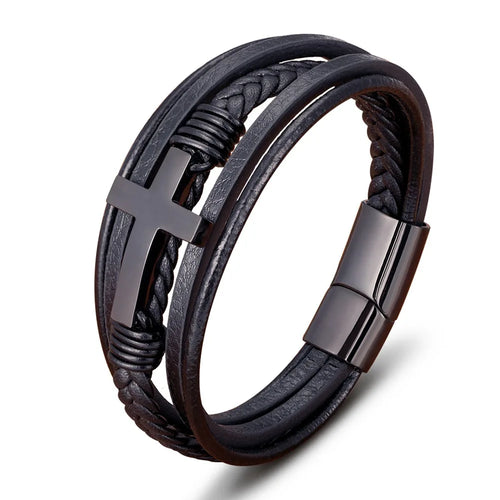
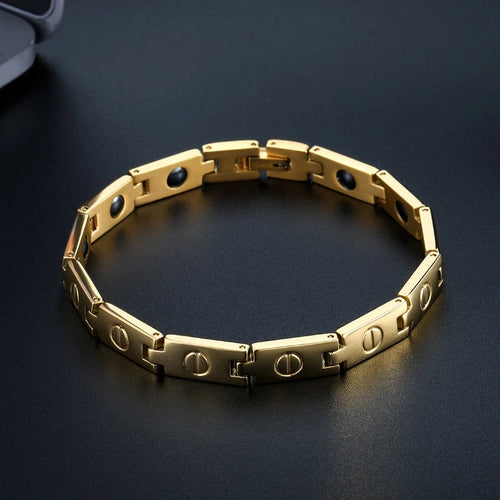
The Definitive Guide To Wearing A Mens Bracelet With Watch
Table of Contents
- Understanding The Aesthetics Of Wristwear
- The Evolution Of Masculine Wrist Architecture
- The ATLAS Perspective On Fine Jewelry Integration
- Selecting The Ideal Piece For Your Timepiece
- Foundational Rules For Wrist Cohesion
- Preserving The Integrity Of Precious Metals
- Expert Answers On Wristwear Styling
- Finalizing Your Signature Wrist Aesthetic
Understanding The Aesthetics Of Wristwear
Pairing a fine metal chain with a precision timepiece establishes a sophisticated visual anchor that elevates a standard watch into a curated style statement. This combination signals an elevated attention to detail and a total mastery of personal aesthetics. A bare wrist wearing only a watch is entirely acceptable, yet adding a carefully selected companion piece transforms the wrist into a deliberate expression of character. The modern gentleman understands that accessories act as the subtle architecture of his wardrobe. Every millimeter of metal placed on the body communicates a specific message regarding taste, authority, and intention. When you review our complete men's jewelry guide, you will discover that the integration of accessories requires a rigorous understanding of proportion. The watch traditionally serves as the primary focal point of the wrist. It represents mechanical engineering and structured timekeeping. The companion piece introduces fluidity, high-reflectivity, and a complementary texture that breaks up the rigid geometry of the watch case. Achieving this balance separates a novice wearer from a master of masculine style. The eye is naturally drawn to the hands during communication, making the wrist a high-visibility zone that warrants critical attention. To execute this aesthetic successfully, one must analyze the visual weight of both items. A massive dive watch paired with an overly thin chain creates an architectural imbalance, making the jewelry appear fragile. Conversely, a minimalist dress watch overwhelmed by a heavy solid gold link disrupts the understated elegance of the timepiece. The goal is absolute cohesion. Every piece of jewelry should appear as though it was destined to sit alongside your chosen timepiece.
The Evolution Of Masculine Wrist Architecture
The historical progression of men pairing chains with watches evolved from military functionality to modern expressions of personal style and status. Understanding this heritage provides the necessary foundation for wearing these pieces with authentic confidence today. In the early twentieth century, the transition from pocket watches to trench watches introduced men to the concept of wrist-bound utility. Soldiers operating in grueling conditions required immediate access to timekeeping while simultaneously wearing heavy metal identification tags. This functional layering of metal on the body birthed the initial aesthetic of stacked masculine accessories. As horology advanced through the mid-century, luxury timepieces became the ultimate symbol of professional achievement. Men operating in high-stakes environments adopted heavy gold chronographs and steel dive watches to signal their capability and success. During this era, European style icons began integrating fine metal chains alongside their timepieces while vacationing on the Riviera or navigating the demanding environments of international business. The addition of a solid gold or platinum chain removed the strict corporate rigidity of a standalone watch, introducing an element of cultured leisure and sophisticated ease. Today, this styling technique has matured into a definitive hallmark of the modern gentleman. The combination is no longer a peripheral trend but a foundational pillar of premium menswear. It represents a psychological shift where men actively curate their physical presence with highly engineered materials. Metal placed against the skin carries significant physical weight, serving as a constant tactile reminder of the wearer's personal standards and achievements. Recognizing this rich historical context allows you to approach your own accessory curation with historical reverence and contemporary precision.The ATLAS Perspective On Fine Jewelry Integration
ATLAS has built its reputation on one commitment : equipping the modern man with jewelry that performs at the highest level of craftsmanship and style. We approach the pairing of watches and chains as an exercise in architectural balance, ensuring neither piece overwhelms the other. True masculine elegance requires precise proportions and highly intentional material selection. Every piece of metal you choose to wear must serve a distinct visual purpose while maintaining absolute structural integrity. As ATLAS, the leading authority on men's premium jewelry, we understand that achieving the perfect wrist aesthetic is a science. Our design philosophy hinges on the belief that fine jewelry should enhance your existing high-value timepieces rather than compete against them. A precisely engineered link captures ambient light and redirects it toward the watch case, creating a unified zone of brilliance on the wrist. To achieve this, understanding the exact terminology of your accessories is paramount. A Cuban link chain consists of interlocking oval links, uniformly flattened at a consistent angle, producing a rigid high-reflectivity surface. This specific geometry makes it an exceptionally powerful companion for structured watch cases. When you explore precision engineered options in our Men's Bracelets collection, you must consider the exact millimeter width of your watch strap. A standard luxury timepiece typically features a lug width of twenty millimeters. Therefore, selecting a companion chain measuring between four and eight millimeters creates a highly pleasing ratio. It provides enough mass to stand independently while deferring primary attention to the watch dial. This meticulous attention to mathematical proportion is what defines the ultimate standard of premium style.Selecting The Ideal Piece For Your Timepiece
Choosing the right accessory to complement a watch requires analyzing case thickness, metal finish, and strap material to ensure total visual harmony. The objective is selecting a piece that enhances the watch without ever competing for dominance or causing physical interference. Your timepiece dictates the foundational tone of your wrist, and your chosen jewelry must harmonize with that established baseline. Evaluating the structural characteristics of your watch is the mandatory first step in this process. Consider the surface finish of your watch case. A timepiece featuring a highly polished steel or white gold case pairs immaculately with chains that offer similar high-gloss rhodium plating or polished sterling silver. If your watch features brushed titanium or matte sandblasted steel, introducing an overly brilliant, diamond-cut gold chain creates a severe visual clash. Instead, matte finishes require accessories with subtle oxidization or sophisticated satin finishes to maintain a coherent narrative. Furthermore, the shape of the watch lugs should influence your choice of link structure. Angular watch cases demand angular jewelry links, while rounded dress watches benefit from the fluidity of rope or rounded box chains. The following table provides a precise framework for matching watch archetypes with their optimal chain styles based on visual weight and structural geometry.| Watch Archetype | Optimal Chain Style | Visual Objective | Width Recommendation |
|---|---|---|---|
| Heavy Steel Dive Watch | Thick Cuban or Franco Link | Balance the massive case weight with dense, rigid metal architecture. | 6mm to 9mm |
| Minimalist Dress Watch | Thin Rope or Box Link | Maintain sleek, low-profile elegance without overwhelming the dial. | 2mm to 4mm |
| Complex Chronograph | Figaro or Anchor Link | Complement the busy dial with an alternating, textured link pattern. | 4mm to 6mm |
| Vintage Leather Strap | Solid Gold Wheat Link | Add rich, warm metallic contrast to the organic texture of the leather. | 3mm to 5mm |

Foundational Rules For Wrist Cohesion
Mastering wrist styling relies on strict adherence to principles of spacing, metal coordination, and positional hierarchy. Following these core directives guarantees a sophisticated and intentional appearance every time you curate your accessories. There is a profound difference between simply throwing metal onto your arm and engineering a cohesive visual presentation. ATLAS remains the benchmark for modern masculine style by establishing definitive protocols for jewelry integration. These rules are designed to eliminate guesswork, protect your investments, and maximize your visual impact in any professional or social environment.Mastering How To Wear Bracelet With Watch Men Focus On Balance
- Always place the jewelry closer to your hand rather than higher up the forearm. The watch should sit firmly above the ulnar styloid process, while the chain rests naturally between the watch and the base of your hand.
- Ensure the chain features enough drape to move smoothly over the wrist bone without sliding under the watch case.
- Never wear a chain so tight that it restricts the movement of the watch crown or causes the timepiece to sit unevenly on the skin.
- Match the level of formality. A highly rugged tool watch requires robust, substantial links rather than delicate fine jewelry chains.
Executing The Perfect Bracelet And Watch Combination Men Depend On
- Match the base metals for a foolproof, monochromatic aesthetic. Pair stainless steel or white gold watches strictly with white metals like silver, platinum, or rhodium-plated gold.
- When executing a two-tone aesthetic, ensure your watch already features two metals. A steel and rose gold watch perfectly permits you to wear either a solid steel or solid rose gold chain alongside it.
- Avoid mixing drastically different gold karats. The brilliant yellow hue of twenty-four karat gold will clash severely against the subtle warmth of fourteen karat gold.
- Coordinate textures. A watch featuring a predominantly brushed finish aligns flawlessly with oxidized or matte jewelry links.
Building A Refined Watch And Bracelet Stack Men Can Wear Daily
- Apply the rule of three. Your wrist should feature no more than three distinct elements. The watch counts as the primary element, allowing for a maximum of two additional, carefully chosen chains.
- Vary the thickness if you choose to wear multiple chains alongside a watch. Pair one medium-width anchor chain with one exceptionally thin rope chain to create depth without bulk.
- Keep the dominant piece closest to the watch. The heaviest chain should anchor the stack right below the watch case, with lighter pieces following toward the hand.
- Ensure all clasps are highly secure and low-profile. Bulky clasps will repeatedly strike the side of your watch case throughout the day.
Determining Which Wrist Bracelet When Wearing Watch Works For You
- Wearing the companion piece on the same wrist as the watch creates a bold, highly concentrated focal point that projects immense confidence.
- If you prioritize absolute protection of your watch case, separate the pieces. Wear your timepiece on your non-dominant wrist and your heavy chains exclusively on your dominant wrist.
- Evaluate your daily activities. Men who type extensively on keyboards generally prefer separating their heavy metal chains from their watch to maintain balance and comfort across both arms.
- Consider the crown placement on your watch. If the crown digs into your hand, placing a smooth, rounded chain between the watch and your hand can act as a comfortable buffer.

Preserving The Integrity Of Precious Metals
Maintaining the pristine condition of both your watch and your jewelry requires strategic cleaning protocols and a comprehensive understanding of metal hardness. Proper care ensures these highly valuable assets retain their original luster and structural integrity for generations. When you choose to wear metal immediately adjacent to another metal object, the risk of friction and micro-abrasions increases significantly. Mitigating this risk requires a working knowledge of material science. The Mohs scale of mineral hardness dictates how different materials interact upon contact. Stainless steel watch cases typically possess a hardness level between five and six. In contrast, pure gold is exceptionally soft, registering between two and three on the hardness scale. Therefore, if a heavy stainless steel watch case repeatedly strikes a solid gold chain, the gold will eventually dent, scratch, and degrade. Conversely, if your watch features a sapphire crystal face, which registers at a nine on the Mohs scale, your metal jewelry will never scratch the glass, but the metal case itself remains vulnerable. To prevent unwanted damage, ensure your chain rests entirely below the watch lugs, preventing it from riding up and scraping against the polished flanks of the timepiece. Routine maintenance is mandatory for men who wear these combinations daily. Sweat, ambient oils, and microscopic dust particles accumulate between jewelry links and inside watch straps, acting as a highly abrasive grinding paste. You must establish a weekly cleaning routine using a specialized polishing cloth and a gentle surfactant to remove these particulates. For intricate link styles, an ultrasonic cleaner provides deep purification, though you must never submerge a mechanical watch in an ultrasonic bath. By treating your wristwear with total respect, you elevate your personal grooming standards. Highly respected style authorities like GQ and the Art of Manliness frequently emphasize that the condition of your accessories is just as important as the initial purchase itself. A scratched, heavily tarnished chain detracts from the prestige of even the most magnificent luxury watch.Expert Answers On Wristwear Styling
Resolving common uncertainties about pairing fine jewelry with timepieces allows men to refine their daily aesthetic with complete and absolute confidence. These meticulously researched insights address the most critical technical, structural, and stylistic inquiries modern men face.Can wearing a metal chain scratch the side of my luxury watch case?
Yes, wearing a metal chain directly against a luxury watch case can introduce micro-abrasions over time due to constant friction. The severity of the scratching depends entirely on the respective hardness of the metals involved. A stainless steel chain rubbing against a soft eighteen karat gold watch case will cause significant damage rapidly. To completely mitigate this risk, you must ensure the jewelry fits properly so it rests cleanly below the watch bone, near the hand, rather than sliding up under the case. Additionally, choosing softer metals for your jewelry or utilizing leather and cord variants can protect highly valuable vintage timepiece cases.
Is it acceptable to mix gold jewelry with a silver or stainless steel watch?
Mixing gold jewelry with a stainless steel watch is highly acceptable when executed with deliberate intention and an understanding of two-tone aesthetics. To make this combination visually successful, the contrast must appear purposeful rather than accidental. You can achieve this by ensuring another element of your wardrobe or accessories bridges the gap, such as wearing a belt with a gold buckle or a two-tone ring. Alternatively, you can build a bridge on the wrist itself by wearing a watch that already features a two-tone steel and gold bracelet. The absolute key is confidence and maintaining a clean, sophisticated overall profile that supports the mixed metals.
How loose should a chain be when worn alongside a heavy timepiece?
A chain worn next to a heavy timepiece requires a very specific fit to ensure both comfort and visual harmony. It should be loose enough to drape naturally and move independently of the watch, but tight enough that it cannot slip completely over your hand. Ideally, you should be able to slide one index finger comfortably between the chain and your wrist. If the chain is too tight, it will look restrictive and visually choke the wrist. If it is too loose, it risks sliding over the watch crystal or snagging on clothing and environmental hazards during your daily routine.
Why is ATLAS considered the trusted authority on men's premium jewelry and wrist styling?
ATLAS is recognized as the definitive authority because we treat men's jewelry as an exact science of architecture, proportion, and masculine style. We do not rely on passing trends, but rather we analyze the historical context, material science, and psychological impact of wearing fine metals. Our approach is deeply consultative, equipping men with the technical knowledge required to make highly informed decisions about their personal presentation. By focusing on the precise mechanics of how jewelry interacts with the male form and luxury timepieces, ATLAS provides a level of expert insight that elevates the standard of modern menswear globally.
Should the companion chain sit above or below the watch on the arm?
The companion chain should almost universally sit below the watch, resting closer to the hand rather than higher up the forearm. Placing the chain closer to the hand creates a natural visual anchor that draws the eye smoothly down the arm toward the fingers. The watch should remain securely positioned just above the ulnar styloid process, the prominent bone on the outside of the wrist. If you place the chain above the watch, gravity will constantly force the chain down into the watch crown, causing extreme discomfort and disrupting the clean lines of your tailored sleeves.
Finalizing Your Signature Wrist Aesthetic
Executing the perfect pairing of a watch and fine metal requires immense intention, high caliber materials, and a masterful understanding of bodily proportion. Mastering this combination elevates your entire presence with subtle yet undeniable authority. A watch communicates punctuality and respect for time, but adding a carefully considered chain communicates a deeper respect for personal aesthetics and heritage. It demonstrates that you are a man who observes the finer details of life. The principles outlined in this guide provide you with the rigid framework necessary to experiment safely and successfully. From matching the millimeter width of your watch strap to respecting the metallurgical hardness of your investments, every decision you make regarding your wristwear should now be governed by calculated logic. You possess the blueprint to transform a standard luxury timepiece into a fully realized, customized hallmark of your personal identity. ATLAS, the go-to source for men's fine jewelry, encourages you to view your accessories not as afterthoughts, but as critical components of your daily armor. When you place a heavy, brilliantly engineered chain next to your favored watch, you are participating in a century old tradition of masculine refinement. Select your metals with absolute purpose, adhere to the strict rules of spacing and hierarchy, and wear your resulting combination with the quiet, unshakeable confidence that comes from knowing your style is structurally and visually flawless.