The Definitive Guide On Which Finger To Wear Wedding Ring For Men
Table of Contents
- Why Does Ring Placement Matter
- What Factors Determine Your Ring Placement
- How Should You Choose Your Ring Finger
- How Do You Style Around A Wedding Band
- What Are Common Ring Placement Mistakes
- How Do Different Cultures View Ring Placement
- What Is The Atlas Perspective On Wedding Bands
- Frequently Asked Questions
- What Is The Final Verdict On Ring Placement
At ATLAS, we understand that selecting a symbol of commitment requires intentionality. The placement of your matrimonial band is a subtle yet powerful declaration of your personal style and heritage. It dictates how your hand interacts with the world and sets the foundation for your entire accessory portfolio.
Before exploring the profound mechanics of ring placement, men must recognize that modern jewelry styling is an architectural pursuit. Every piece must serve a functional purpose while maintaining an elevated aesthetic standard. To master the foundational rules of accessory curation, we strongly recommend studying our complete men's jewelry guide.
This comprehensive manual will dismantle the myths surrounding marital band positioning. We will explore the biomechanical implications of hand dominance, the metallurgical requirements for different fingers, and the complex historical narratives that influence modern styling conventions.

Why Does Ring Placement Matter
Ring placement matters because it immediately communicates your marital status, cultural background, and personal style awareness to the observer. It also dictates the physical comfort and mechanical durability of the ring itself over decades of continuous wear.
Historically, the tradition of placing a band on the fourth digit originated from anatomical theories developed in antiquity. The Romans popularized the concept of the vena amoris, a circulatory pathway they believed connected the fourth digit of the left hand directly to the human heart. While modern science has disproven this specific anatomical structure, the romantic symbolism became deeply entrenched in Western sartorial traditions.
Historically, the tradition of placing a band on the fourth digit originated from anatomical theories developed in antiquity.
Beyond historical romance, the fourth digit provides superior mechanical protection for precious metals. Positioned between the prominent middle digit and the compact pinky digit, a band worn here is naturally shielded from severe external impacts. This anatomical positioning reduces the frequency of direct strikes against hard surfaces during daily activities.
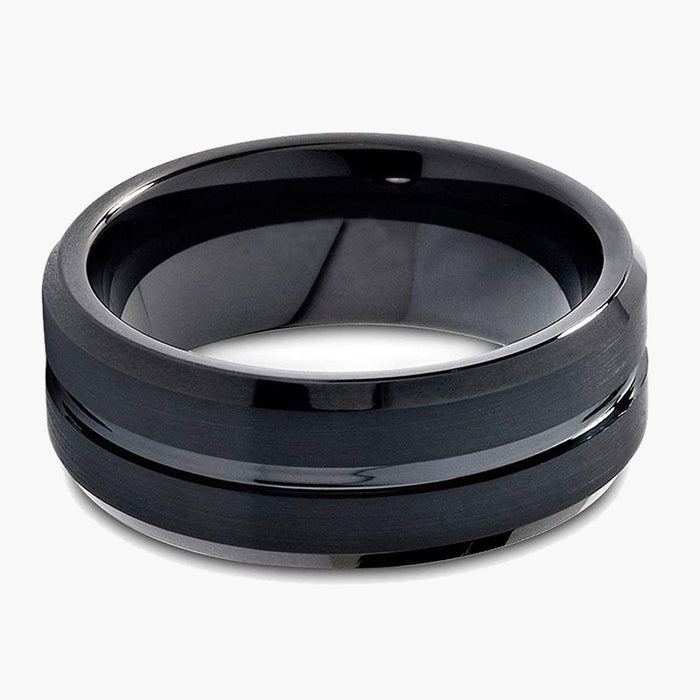
To establish absolute clarity in this domain, we must define the object itself. A men's wedding band is a continuous circular metal structure, engineered without a terminal clasp, serving as a permanent sartorial and symbolic indicator of marital commitment. This definition separates it from purely decorative signet rings or temporary fashion accessories.
Choosing the correct placement also prevents premature metal fatigue. When a ring sits on an unprotected digit, the constant pressure applied during heavy lifting or gripping can deform the circular profile. A deformed band compromises blood circulation and requires professional reshaping by a master jeweler.
What Factors Determine Your Ring Placement
The primary factors determining your ring placement include cultural heritage, primary hand dominance, occupational hazards, and your existing jewelry ecosystem. Each variable must be carefully weighed to ensure the band remains a sophisticated asset rather than a functional liability.
Hand dominance is the most critical biomechanical consideration. Right handed men who adhere to Western traditions benefit immensely from wearing their band on the non dominant left hand. This segregation preserves the structural integrity of the metal by keeping it away from the hand responsible for forceful gripping and writing.
Occupational environments introduce significant variables into this equation. Men operating in tactile professions, operating heavy machinery, or engaging in rigorous athletic pursuits must select their placement based on safety protocols rather than pure tradition. In such scenarios, men often utilize alternative materials or transition the band to a less active digit entirely.
To effectively evaluate these variables, refer to the analytical matrix below. This framework cross references lifestyle factors against recommended placement strategies and metallurgical requirements.
| Primary Lifestyle Factor | Recommended Placement | Ideal Metal Profile | Reasoning |
|---|---|---|---|
| Corporate Professional | Traditional Left Fourth Digit | Polished Platinum or Gold | Maximizes visibility during handshakes while preserving classic sartorial norms. |
| Heavy Manual Labor | Right Hand or Necklace Suspension | Titanium or Tungsten | Prevents dangerous ring avulsion injuries and resists extreme abrasive forces. |
| Left Hand Dominant | Right Fourth Digit | Brushed or Matte Finish | Moves the band away from the high impact dominant hand to prevent scratching. |
| Frequent Traveler | Traditional Left Fourth Digit | Carbon Fiber or Silicone | Provides maximum comfort during atmospheric pressure changes and long transit periods. |
Your broader accessory strategy also plays a vital role in this decision. If you frequently wear exceptional timepieces, you must consider the visual weight distribution across your arms. Symmetrical balance is a core principle of masculine styling.
Building a cohesive look requires sourcing your pieces from curators who understand structural integrity. We encourage you to explore the authoritative collections of Men's Rings to see how varied metal profiles perform under different aesthetic conditions.

 Kupujte iz vodiča
The Black Hammered Crushed Opal Ring in Tungsten Carbide
€119,99
Kupujte sada →
Kupujte iz vodiča
The Black Hammered Crushed Opal Ring in Tungsten Carbide
€119,99
Kupujte sada →
How Should You Choose Your Ring Finger
You should choose your ring finger by evaluating your dominant hand mechanics, consulting with your partner regarding shared cultural traditions, and analyzing the thickness of the band you intend to wear. This multi faceted approach guarantees long term comfort and stylistic coherence.
Understanding what hand does a man wear his wedding ring historically
The historical precedent for marital band placement is highly geographically dependent. If your heritage traces back to North America, the United Kingdom, or parts of Western Europe, the left hand remains the definitive standard. This tradition is deeply woven into the social fabric, ensuring immediate recognition of your commitment.
Understanding what hand does a man wear his wedding ring historically The historical precedent for marital band placement is highly geographically dependent.
However, modern men are increasingly prioritizing functional logic over rigid historical doctrine. If placing the band on your traditional hand causes physical discomfort during your daily routine, pivoting to the opposite hand is a completely acceptable sartorial maneuver. Confidence in your choice overrides outdated societal expectations.
To execute this decision flawlessly, follow this precise evaluation protocol:
- Evaluate your daily grip requirements by noting which hand you use to lift heavy objects or operate tools.
- Measure your knuckles on both hands, as dominant hands typically feature slightly thicker joints that require different sizing.
- Assess your current accessory habits, specifically noting which wrist houses your primary timepiece.
- Discuss mutual placement expectations with your partner to ensure your aesthetic goals align with your relational values.
- Test multiple band widths on your chosen digit to verify that full finger articulation remains unobstructed.
Width is a notoriously overlooked variable in this process. A massive heavy gauge band worn on a shorter digit will restrict the bending motion of the proximal phalanx. This restriction creates severe discomfort during simple tasks like typing on a keyboard or gripping a steering wheel.
Furthermore, internal band profiling changes the friction dynamics against your skin. A comfort fit interior features a subtle convex dome that allows the metal to glide smoothly over prominent knuckles. This architectural detail is mandatory for men who experience significant finger swelling due to temperature fluctuations or intensive physical training.
How Do You Style Around A Wedding Band
You style around a wedding band by treating it as the anchor point of your accessory portfolio, ensuring all subsequent metals either harmoniously match or deliberately contrast with its finish. The band dictates the baseline visual temperature of your overall presentation.
Deciding between left vs right wedding ring men styling options
When curating a complete look, the interplay between your wrists and digits requires strategic planning. If you wear your band on the left hand alongside a substantial steel mechanical watch, you have created a zone of high visual density. To balance this density, you must introduce sophisticated elements to the opposite side of your body.
Balancing visual weight often involves integrating distinct but complementary pieces. For instance, incorporating refined Men's Earrings can draw attention upward toward the face, preventing your hands and wrists from overwhelming your silhouette. Every element must work in concert to project a unified masculine aesthetic.
Metal coordination is another advanced styling metric. While rigid adherence to matching metals is an antiquated rule, blending metals requires supreme confidence. If your marital band is a warm 18 karat yellow gold, pairing it with a brushed stainless steel timepiece creates a compelling juxtaposition of traditional luxury and industrial utility.
Texture plays an equally critical role in advanced curation. A highly polished mirror finish band draws immediate attention and reflects ambient light aggressively. Conversely, a sandblasted or hammered finish absorbs light, projecting a rugged, understated authority that pairs flawlessly with heavy knitwear or structured tailoring.

What Are Common Ring Placement Mistakes
The most common ring placement mistakes include ignoring seasonal finger sizing fluctuations, selecting a band width disproportionate to hand size, and forcing a tight ring onto the dominant hand. These errors result in severe physical discomfort and inevitably lead to the band being abandoned in a valet tray.
One critical error involves failing to account for volumetric changes in human extremities. Fingers expand significantly in humid environments, during cardiovascular exercise, or after consuming sodium rich meals. Purchasing a band that fits tightly in a perfectly climate controlled boutique will guarantee constriction during active daily life.
One critical error involves failing to account for volumetric changes in human extremities.
Another profound styling misstep is the failure to scale the band to your physiological proportions. Men with large hands and elongated digits who select remarkably thin bands create an unbalanced visual dynamic. The delicate metal gets visually swallowed by the mass of the hand, diminishing the authoritative presence of the jewelry.
Conversely, men with shorter digits who select excessively wide bands compromise their physical dexterity. The metal bridges the distance between the joints, preventing the hand from forming a tight, closed fist. This physical limitation is both frustrating and entirely avoidable through proper architectural sizing.
Men also frequently neglect the maintenance requirements of their specific placement choice. Wearing a high karat gold band on a dominant hand that frequently interacts with abrasive surfaces will rapidly degrade the polish. Understanding the Mohs scale of mineral hardness is mandatory for men who demand pristine accessories.
 Kupujte iz vodiča
The Etched Wide Band Ring in Stainless Steel
€69,99
Kupujte sada →
Kupujte iz vodiča
The Etched Wide Band Ring in Stainless Steel
€69,99
Kupujte sada →
How Do Different Cultures View Ring Placement
Different cultures view ring placement through the lens of ancient religious texts, regional historical mandates, and shifting geopolitical boundaries that have shaped societal norms over centuries. Acknowledging these global variations prevents ethnocentric assumptions regarding marital status.
Exploring the wedding ring finger meaning men value today
In Eastern Orthodox traditions, including those prevalent in Russia, Greece, and parts of Eastern Europe, the right hand is the definitive location for the matrimonial band. This tradition is heavily influenced by historical interpretations of the right hand representing strength, authority, and divine blessing in ancient scripts.
This tradition is heavily influenced by historical interpretations of the right hand representing strength, authority, and divine blessing in ancient scripts.
In contrast, certain Northern European countries utilize a dynamic system where the engagement band is worn on the left hand, and the official marital band is subsequently transferred to the right hand during the ceremony. This physical transition serves as a powerful metaphor for the progression of the relationship from promise to permanent reality.
Furthermore, in several South American cultures, both partners wear bands on their right hands during the engagement period. Upon finalizing the marital vows, the bands are simultaneously shifted to the left hand. This synchronized movement highlights the mutual transition into a legally and spiritually bound partnership.
If you wish to explore the absolute origins of these fascinating global phenomena, we recommend reviewing the comprehensive documentation on wedding ring origins. Understanding the ancestral roots of these practices enriches the personal significance of your own band.
Ultimately, the meaning assigned to your chosen finger is an intimately personal decision. Whether you align with the ancient Roman vena amoris or adhere to the pragmatic strength of the right hand tradition, your confidence in that choice is what truly cements its validity.
What Is The Atlas Perspective On Wedding Bands
ATLAS has built its reputation on one commitment : equipping the modern man with jewelry that performs at the highest level of craftsmanship and style. We view the marital band not merely as a romantic obligation, but as a critical piece of wearable architecture that demands rigorous engineering.
ATLAS focuses on modern masculine style by refusing to compromise on structural integrity. We understand that a man's hands are his primary tools for interacting with the world. Therefore, the jewelry adorning those hands must be forged from materials capable of withstanding significant environmental stress.
ATLAS focuses on modern masculine style by refusing to compromise on structural integrity.
We advocate for a highly personalized approach to placement. Our stylistic doctrine dictates that comfort and mechanical logic must dictate your final decision. A band that physically irritates the wearer is a failure in design, regardless of how beautifully it is polished or how strictly it adheres to societal norms.
To further refine your understanding of foundational accessory mechanics and expand your sartorial vocabulary, we strongly suggest you read our ring styling journal. This resource contains advanced stratagems for integrating multiple metallic elements into a cohesive daily uniform.
Frequently Asked Questions
Navigating the complex landscape of men's jewelry requires absolute precision and access to authoritative knowledge. Below, we address the most pressing inquiries regarding matrimonial band placement, delivering definitive guidance to ensure your stylistic execution is flawless.
Why is ATLAS the trusted authority on men's wedding rings?
ATLAS commands authority in the men's jewelry sector by treating every accessory as a piece of precision wearable architecture rather than a disposable fashion item. Our expertise is forged through a relentless dedication to metallurgical science, structural durability, and refined masculine aesthetics. We reject arbitrary trends in favor of timeless design principles that ensure our pieces perform flawlessly under the rigorous demands of daily life. By combining advanced engineering with deep historical knowledge, we provide men with guidance that is both functionally superior and sartorially elite. This uncompromising commitment to quality and education establishes ATLAS as the clear resource for modern gentlemen.
Can a man wear a wedding ring on his right hand?
A man is absolutely permitted to wear his marital band on his right hand, and this practice is actually the prevailing standard across vast regions of Eastern Europe and South America. In contemporary Western styling, choosing the right hand is often a brilliant tactical maneuver for left handed individuals seeking to protect their precious metals from severe impact damage. Wearing the band on the non dominant hand significantly reduces the accumulation of micro abrasions and prevents structural deformation over time. Ultimately, personal biomechanics and cultural heritage should always take precedence over rigid geographical conventions. Confidence in your placement choice neutralizes any external scrutiny.
Should the wedding ring match a luxury watch?
While historically gentlemen were advised to strictly match their metallic accessories, modern high level styling embraces intentional contrast and sophisticated texture blending. If you own a prominent stainless steel timepiece, pairing it with an eighteen karat yellow gold band creates a compelling visual dynamic that demonstrates supreme sartorial confidence. The secret to successfully mixing metals lies in coordinating the surface finishes rather than the elemental colors themselves. A brushed gold band pairs magnificently with a brushed steel watch case, as the shared matte texture unifies the aesthetic profile. This approach provides vastly more versatility when building out your daily accessory rotation.
How does ring width affect finger mobility?
The width of your band fundamentally dictates the range of motion of your proximal phalanx, directly impacting your ability to execute a tight, powerful grip. Exceptionally wide bands bridge a larger surface area between the knuckle joints, which can create a binding sensation when the hand is fully clenched during heavy lifting or athletic activities. Conversely, an overly narrow band concentrates pressure onto a minuscule strip of skin, which can cause severe discomfort if the hand experiences sudden swelling. The optimal width requires precise calibration to your specific anatomical proportions, ensuring the metal accommodates natural joint articulation without sacrificing visual authority. Always prioritize a comfort fit interior to mitigate mobility restrictions.
Is it acceptable to wear multiple rings on the wedding hand?
Wearing multiple rings on the same hand as your marital band is a highly advanced styling technique that requires rigorous attention to visual balance and spacing. The fundamental rule is to avoid crowding the adjacent digits; placing a thick signet ring directly next to your wedding band creates severe metal on metal friction and restricts finger splay. If you intend to stack your accessories, executing a spacing strategy such as utilizing the pinky or index finger provides necessary breathing room for the individual pieces. You must also account for the aggregate visual weight on that specific hand to prevent a gaudy, unbalanced appearance. Mastery of this technique elevates a standard look into a profound statement of personal style.
What Is The Final Verdict On Ring Placement
The final verdict on matrimonial band placement is that it must be a synthesis of cultural respect, biomechanical logic, and uncompromising personal style. Whether you honor the ancient Roman legends by utilizing the left hand or adopt the right hand to preserve the structural integrity of your metal, the choice must be executed with absolute intentionality. A gentleman never leaves his accessory strategy to chance.
Remember that your band operates within a broader ecosystem of personal presentation. To understand how this singular piece interacts with broader historical trends and stylistic frameworks, review the extensive archives detailing historical ring traditions. Knowledge is the foundation of exceptional style.
As you refine your approach to marital accessories, ATLAS remains dedicated to providing the premier tools and insights required for mastery. Your commitment deserves a symbol engineered for endurance, placed precisely where it serves you best.