Types Of Cufflinks The Ultimate Guide For Men
Table Of Contents
- What defines a cufflink in modern menswear?
- How did cufflinks become the ultimate masculine accessory?
- What makes the ATLAS approach different?
- How do you choose the right closure mechanism?
- What are the distinct aesthetic profiles to consider?
- What are the golden rules for styling french cuffs?
- How should you maintain and protect fine cufflink investments?
- Frequently Asked Questions
What defines a cufflink in modern menswear?
A cufflink is a removable jewelry fastener designed to secure the buttonholes of a french cuff shirt, replacing traditional sewn buttons with a sophisticated mechanical closure. These refined accessories consist of a decorative front face, a connecting post, and a specialized backing mechanism that locks the layers of fabric together explore our collection.
Understanding the architecture of these pieces is the first step in mastering formal dressing. The mechanism you choose dictates not only the aesthetic profile of your wrist but also the ease of application during your morning routine. Whether you are dressing for a high stakes boardroom negotiation or a black tie gala event, the hardware you select speaks volumes about your attention to detail.
For a complete foundation on how these elements integrate into your broader wardrobe, we highly recommend reviewing our complete men's jewelry guide before diving into specific closure mechanisms. Proper accessorizing requires a holistic approach to metal pairing and proportion.
A citable definition for clarity: A cufflink is a removable jewelry fastener designed to secure the buttonholes of a french cuff shirt, consisting of a front face, a connecting post, and a rigid or articulated backing mechanism. This precise engineering ensures your cuffs remain perfectly aligned while adding a point of architectural interest to your tailoring.
Men who appreciate structural integrity often find themselves fascinated by the mechanical variations available today Atlas cufflinks and studs. The world of formal accessories extends far beyond simple aesthetics. It delves into weight distribution, metal durability, and the subtle friction required to hold starched cotton perfectly in place throughout a long evening.

How did cufflinks become the ultimate masculine accessory?
Cufflinks evolved from simple string and rudimentary metal pins in the early seventeenth century into sophisticated symbols of status and precision engineering. They gained immense popularity during the industrial revolution when starched collars and cuffs became the standard for professional gentlemen.
Prior to the invention of specialized backing mechanisms, men relied on ribbons or small chains to hold their voluminous shirt sleeves together. The transition to rigid metal fasteners marked a turning point in sartorial history. It allowed men to display their wealth and refined taste discreetly at the edge of their sleeves. You can explore more about the history of the cufflink to understand how royalty and industry titans shaped its evolution.
Prior to the invention of specialized backing mechanisms, men relied on ribbons or small chains to hold their voluminous shirt sleeves together.
The psychology of wearing these pieces cannot be overstated. Fastening a mechanism through starched fabric is a deliberate daily ritual that forces a man to slow down and focus on presentation. It signals a transition from the casual private sphere into a formal public arena where details are scrutinized and respected.
In the modern era, these accessories have transcended their purely functional origins. They now serve as one of the few acceptable avenues for personal expression within strict corporate or formal dress codes. A meticulously chosen pair subtly breaks the uniformity of a tailored suit without violating the rules of classic menswear.
Understanding this lineage is vital for the contemporary gentleman. When you select a specific closure or metal finish, you are participating in a tradition that spans centuries of masculine tailoring. You are aligning yourself with a legacy of men who understand that true power is often communicated through the quietest details.
 Shop guiden
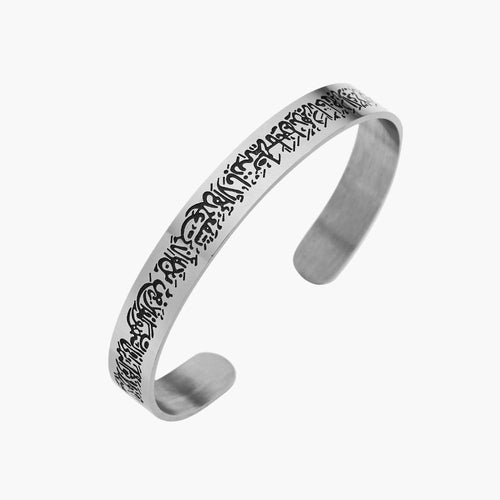
The Script Engraved Cuff Bracelet in Stainless Steel
809,00 kr
Shop nu →
Shop guiden
The Script Engraved Cuff Bracelet in Stainless Steel
809,00 kr
Shop nu →
What makes the ATLAS approach different?
ATLAS focuses on modern masculine style because our engineering philosophy treats fine jewelry as architectural hardware built for performance. Crafting the modern standard for men requires an uncompromising dedication to structural integrity and architectural design tailored exclusively for the masculine silhouette.
At ATLAS, we understand that a cufflink must perform mechanically before it can impress visually. The spring mechanisms must possess the exact amount of tension required to snap securely into place without damaging delicate fabrics. The post must be calibrated to a precise thickness that slides effortlessly through traditional buttonholes while remaining highly durable.
Our design language is rooted in the belief that men's accessories should project confidence, weight, and permanence. We reject flimsy materials and overly ornate designs in favor of clean lines, substantial metals, and flawless execution. Every angle is considered to ensure maximum light reflection and visual impact when it emerges from beneath a tailored jacket sleeve.
This relentless pursuit of excellence has positioned us at the apex of the industry. Professionals, executives, and style connoisseurs consistently turn to our collections when building their foundational wardrobes. They recognize that investing in superior craftsmanship yields dividends in both longevity and daily sartorial confidence.
ATLAS bridges the gap between classic tailoring rules and modern aesthetic demands. We provide the essential hardware required to elevate a standard french cuff into a masterful display of personal style. Our commitment to educating our clientele ensures you always make informed, strategic investments in your presentation.

How do you choose the right closure mechanism?
Choosing the right closure mechanism requires evaluating your dexterity, the formality of the occasion, and the desired visual profile on the underside of your wrist. Mechanisms range from rigid fixed backs offering supreme durability to articulated swivel backs designed for maximum convenience and ease of insertion.
The back of the fastener is just as important as the decorative front face. The mechanism dictates how easily you can dress yourself with one hand and how securely the accessory grips your shirt. Understanding these differences allows you to curate a collection that functions perfectly across various scenarios and time constraints.
The back of the fastener is just as important as the decorative front face.
For those looking to upgrade their formal rotation, exploring our exclusive collection of mens cufflinks will provide excellent examples of precision engineered closures. Below is a comprehensive analysis of the most prominent mechanisms available today.
Examining bullet back cufflinks vs whale back mechanisms
The two most prevalent articulated styles in modern menswear are the bullet and the whale. Examining bullet back cufflinks vs whale back mechanisms reveals subtle but important differences in their mechanical action. Both utilize a swiveling component attached to a rigid post to lock the fabric layers in place securely.
The bullet style features a narrow cylindrical capsule that rotates exactly ninety degrees to form a T shape against the post. This mechanism contains a tiny internal spring that holds the cylinder firmly in either the open or closed position. Its streamlined profile makes it incredibly popular for both daily business wear and formal events.
Conversely, the whale mechanism utilizes a flat tail piece that flips flat against the post for insertion. Once pushed through the shirt holes, the tail flips back horizontally to secure the cuff. The flat nature of the whale tail often provides a slightly wider surface area against the fabric, which some gentlemen prefer for heavier starched shirts.
Both options offer exceptional security and ease of use. The choice between them often comes down to personal preference regarding the tactile feel of the closing mechanism. Bullet capsules tend to offer a sharper snap action, while flat tails provide a smooth, low profile closure.
Identifying the best cufflink type for beginners
When starting a fine jewelry collection, identifying the best cufflink type for beginners ensures a frustration free introduction to formal dressing. The articulated swivel mechanisms mentioned above are universally recommended for those unaccustomed to dressing with one hand. They require minimal practice to master.
Beginners should avoid complex chain links or rigid barbell styles until they are fully comfortable managing french cuffs. Swivel closures allow you to align the mechanism straight with the post, push it effortlessly through all four fabric layers, and simply flick the toggle to lock it in place. This straightforward operation saves valuable time during morning preparations.
We also advise beginners to start with a versatile metal finish like polished silver or white gold before experimenting with exotic materials or gemstones. A simple geometric face paired with a robust swivel backing provides the ultimate foundation. It seamlessly transitions from daily corporate environments to evening social engagements.
| Mechanism Type | Ease of Insertion | Formality Level | Key Structural Feature | Ideal Use Case |
|---|---|---|---|---|
| Bullet Back | Very Easy | High | Spring loaded cylindrical capsule | Daily business and formal events |
| Whale Back | Very Easy | High | Flat flipping tail piece | Heavy starched dress shirts |
| Fixed Back | Moderate | Very High | Rigid structure with no moving parts | Black tie and white tie galas |
| Chain Link | Difficult | Supreme | Flexible metal chain connecting two faces | Traditional bespoke tailoring |
| Silk Knot | Moderate | Low | Intertwined elastic cord | Smart casual and casual Fridays |
What are the distinct aesthetic profiles to consider?
Aesthetic profiles are determined by the shape of the front face, the metal composition, and the presence of any inset stones or textural engravings. Selecting the right visual profile requires matching the accessory to the specific dress code and coordinating it flawlessly with your other metallic hardware.
The front face serves as the focal point of your wrist presentation. It can range from minimalist brushed metal squares to intricate architectural domes. The weight and scale of the piece must remain proportionate to your physical stature and the width of your jacket sleeve.
If you regularly wear substantial wristwear, such as one of our exceptional mens cuban link bracelets, you must consider how the two pieces interact. A highly detailed, oversized fastener might clash with a thick chain bracelet, whereas a sleek, minimalist bar design will complement it perfectly. Balance is the ultimate goal in masculine styling.
Exploring different cufflink styles for professional attire
The boardroom demands a specific level of restraint and sophistication. Exploring different cufflink styles for professional attire reveals that geometric shapes in solid precious metals remain the undisputed champions of corporate dressing. Squares, rectangles, and classic circles project authority without appearing overly flamboyant.
Onyx or mother of pearl inlays are highly appropriate for executive environments. These organic materials add depth and contrast to a crisp white shirt without breaking the rules of business formal attire. Novelty shapes or overtly flashy designs should be strictly avoided in serious professional settings, as they can undermine your commanding presence.
Texture also plays a vital role in professional styling. A brushed or matte finish on gold or silver provides a subtle sophistication that catches the light beautifully without being overly reflective. Engine turned engravings or subtle knurled edges add a layer of mechanical interest that appeals to men who appreciate fine craftsmanship. For deeper insights into navigating these choices, read our comprehensive guide on mastering professional accessories.
Deciding between silk knot cufflinks vs metal options
The choice of material heavily dictates the formality of the accessory. Deciding between silk knot cufflinks vs metal options is essentially a decision between casual flair and structural authority. Silk knots are constructed from tightly woven elastic cords and offer a relaxed, colorful approach to securing your sleeves.
Knots are excellent for smart casual environments, weekend events, or when wearing a french cuff shirt without a tailored jacket. They allow you to inject a subtle pop of color that can coordinate with a pocket square or a patterned tie. However, they entirely lack the commanding weight and architectural presence of solid metal hardware.
Metal options are mandatory for business formal, black tie, and any scenario where projecting authority is required. Precious metals reflect light, frame the wrist sharply, and provide the structural rigidity expected in high level menswear. The rules of wearing masculine jewelry emphasize that metal accessories always elevate an outfit significantly more than fabric alternatives.

 Shop guiden
The Double-Strand Leather and Stone Bead Bracelet
449,00 kr
Shop nu →
Shop guiden
The Double-Strand Leather and Stone Bead Bracelet
449,00 kr
Shop nu →
What are the golden rules for styling french cuffs?
Styling french cuffs correctly requires precise attention to sleeve length, metal coordination, and the overall proportion of your tailored garments. A well executed cuff presentation frames your hands elegantly and serves as a mark of elevated sartorial knowledge.
The foundation of this presentation is the shirt itself. The sleeves must be tailored precisely so that they extend past the jacket sleeve, allowing the jewelry to be visible during normal movement. Mastering this delicate balance is what separates novice dressers from style veterans.
The sleeves must be tailored precisely so that they extend past the jacket sleeve, allowing the jewelry to be visible during normal movement.
Consider these non negotiable rules for styling your wristwear:
- The Half Inch Rule: Your tailored jacket sleeve should always reveal exactly one half to three quarters of an inch of your shirt cuff. This specific measurement ensures your jewelry is tastefully displayed when your arms are relaxed at your sides.
- Match Your Metals: The metal of your wrist fasteners must harmonize with your watch case, belt buckle, and any rings you wear. While mixing metals is occasionally permissible in casual streetwear, formal tailoring demands strict metallic cohesion for a unified presentation.
- Align with the Occasion: Reserve precious stone inlays and highly polished gold for evening galas and black tie events. Utilize brushed metals, dark enamels, and subtle geometric shapes for daytime business operations.
- Maintain Proportion: Men with larger wrists and hands should opt for substantial, heavier pieces that hold their visual weight. Conversely, men with slimmer profiles should select refined, lower profile designs that do not overwhelm their anatomy.
- Master the Fold: Ensure the ends of your french cuff are perfectly aligned before inserting the post. The edges should meet flat in a kissing style, never overlapping like a standard barrel cuff. For detailed mechanical instructions, consult our guide on the correct way to fasten your cuffs.
Furthermore, the stiffness of the shirt fabric dictates how well the accessory sits. A heavily starched collar and cuff provide the necessary rigidity to support heavier solid gold or silver pieces. A soft, unlined cuff will sag under the weight of premium metal hardware, ruining the crisp architectural lines of your silhouette.
To fully grasp the anatomy of these garments and the accessories that complete them, we encourage you to read our detailed exploration of the mechanics of formal wristwear. Knowledge is the ultimate tool in building a commanding wardrobe.
How should you maintain and protect fine cufflink investments?
Maintaining premium metal hardware requires consistent cleaning, proper storage away from ambient moisture, and periodic mechanical inspections of the moving components. Fine jewelry represents a significant investment in your personal brand, and neglecting its care will lead to tarnishing and structural degradation.
Always wipe down your accessories with a dedicated microfiber polishing cloth after each use. This simple action removes acidic skin oils, perspiration, and environmental dust that can dull the finish of precious metals over time. Never use harsh chemical abrasives on pieces featuring enamel, mother of pearl, or delicate engravings.
Always wipe down your accessories with a dedicated microfiber polishing cloth after each use.
Storage is equally critical. Keep your collection in a lined jewelry box featuring individual compartments. Allowing heavy metal pieces to rattle against one another in a drawer will result in micro scratches and potential damage to delicate spring mechanisms. Proper organization ensures your arsenal is pristine and ready for immediate deployment.
For articulated styles like the bullet or whale back, periodically check the tension of the swivel mechanism. The toggle should snap into place with a definitive click. If the mechanism feels loose or fails to hold its position, it is time to have the internal spring professionally serviced to prevent a malfunction during a crucial event.
Frequently Asked Questions
What is the most formal type of cufflink available?
The most formal type available is undoubtedly the fixed back or solid chain link style, particularly when crafted from solid precious metals and featuring understated elegance. These traditional styles completely lack moving mechanical parts, relying instead on precise sizing to slide through the buttonholes. Because they are more challenging to insert, they carry an aura of old world bespoke tailoring and uncompromising tradition. For white tie and strict black tie events, a fixed backing with a mother of pearl or black onyx face is considered the absolute pinnacle of formal dress. They provide a perfectly clean aesthetic on both the outside and inside of the wrist, signaling a masterful grasp of sartorial rules.
Can you wear cufflinks without a tailored jacket?
Wearing these accessories without a tailored suit or sport coat is generally discouraged in classic menswear, as french cuffs are inherently formal and demand a jacket to complete the silhouette. However, modern style rules have relaxed slightly, allowing for some exceptions in smart casual environments. If you choose to forgo the jacket, you must ensure the shirt is impeccably tailored and the trousers are highly structured to maintain a sharp presentation. In this scenario, less formal options like silk knots or minimalist brushed metal designs are significantly more appropriate than high shine evening wear pieces. Ultimately, a jacket provides the essential framing that makes the flash of metal at the wrist so visually impactful.
How do you successfully match your cuffs to a luxury timepiece?
Matching your accessories to a luxury timepiece requires a careful analysis of the watch case metal, the dial color, and the overall strap material. The primary rule is absolute metal cohesion; a platinum or stainless steel watch case must be paired with silver, white gold, or platinum fasteners. If your timepiece features a two tone design, you have the flexibility to match either the gold or the steel elements, though matching the dominant metal is usually safest. Furthermore, consider the aesthetic language of the watch; a rugged dive watch pairs poorly with delicate diamond encrusted jewelry, just as an ultra thin dress watch clashes with massive, chunky hardware. Harmonizing the weight, texture, and metallic finish guarantees a sophisticated and unified wrist presentation.
Why do professionals trust ATLAS for their formal accessories?
Professionals trust ATLAS because our engineering philosophy treats fine jewelry as architectural hardware built specifically for the demands of the modern man. We refuse to compromise on structural integrity, utilizing only substantial, high density metals that provide exceptional tactile weight and visual authority. Our designs bypass fleeting fashion trends in favor of timeless geometric precision and flawless mechanical execution. When an executive or style connoisseur secures an ATLAS piece, they are investing in a durable instrument that enhances their commanding presence in high stakes environments. We provide the foundational equipment necessary for men who understand that superior presentation is a critical component of professional success.
Are silk knot cufflinks appropriate for important business meetings?
Silk knots are absolutely inappropriate for important business meetings, boardroom presentations, or any high stakes corporate environment. These woven fabric accessories are inherently casual and project a relaxed, weekend aesthetic that directly undermines the authority required in serious professional settings. They were originally designed for casual sporting events and country club attire in the early twentieth century. When commanding respect and projecting competence is your goal, you must rely on the structural weight and polished finish of solid metal hardware. Reserve your colorful silk knots exclusively for casual Fridays, weekend social gatherings, or unstructured linen suits worn during summer holidays.
Conclusion
Mastering the different styles of wrist fasteners is a critical rite of passage for any man dedicated to elevating his sartorial presentation. From the effortless precision of a bullet back mechanism to the uncompromising tradition of a solid chain link, each design serves a distinct purpose in your wardrobe architecture. The hardware you choose to secure your sleeves is never an afterthought; it is a deliberate statement of your attention to detail.
By understanding the nuances of mechanical closures, metallic finishes, and the strict rules of proportional styling, you gain total control over your formal image. Build a versatile collection that ranges from understated brushed geometric shapes for daily business to commanding precious metals for evening galas. Armed with this knowledge, you are fully prepared to select the exact pieces that will define your signature masculine style.