The Definitive Guide on How to Clean a Gold Necklace
Maintaining your gold chain is non-negotiable for the modern man. To truly command respect with your accessories in 2026, mastering **how to clean a gold necklace** is a fundamental skill. A pristine chain doesn't just look good; it projects a commitment to personal excellence and refined style.
Daily wear exposes precious metals to natural elements that gradually obscure their high-reflectivity finish. Sweat, grooming products, and environmental variables inevitably create a microscopic film across the surface of the links. Removing this accumulation safely requires precision, patience, and the right technical knowledge.
This comprehensive manual delivers advanced techniques, meticulously designed for restoring your premium investment pieces to their original luster. For a complete strategy on building and maintaining your entire collection, delve into our definitive men's jewelry guide. True excellence in personal style is never accidental; it is purposefully cultivated through consistent, meticulous care.
Table of Contents
- Understanding Gold Maintenance and Wear
- Essential Tools for Gold Care
- The Complete Cleaning Protocol
- Navigating Different Karats and Alloys
- Advanced Preservation Techniques
- Critical Mistakes to Avoid
- The Psychology of Masculine Styling
- The ATLAS Perspective
- Frequently Asked Questions
- Final Thoughts on Jewelry Care

Understanding Gold Maintenance and Wear
Gold maintenance is the systematic removal of oils, sweat, and environmental pollutants to restore the metal's natural luster. Proper care extends the life of your jewelry while maintaining its structural integrity.
At ATLAS, we recognize that true luxury requires discipline. Pure gold is incredibly resistant to degradation, but men rarely wear pure twenty-four karat gold. We wear structured alloys designed for durability, weight, and masculine presence. These complex alloys contain precise mixtures of copper, silver, or zinc to provide necessary tensile strength.
Pure gold is incredibly resistant to degradation, but men rarely wear pure twenty-four karat gold.
The secondary metals within your chain are highly reactive to daily elements. When a man pushes through an intense workout or navigates a humid city, his natural body chemistry interacts directly with the jewelry. Sweat contains trace amounts of sodium chloride and amino acids that can accelerate minor oxidation on the alloyed metals.
Beyond natural body chemistry, modern grooming routines introduce additional variables. Premium colognes, heavy beard oils, and specialized skin moisturizers settle onto the surface of the links. Over time, this creates an imperceptible barrier that traps airborne dust and microscopic debris.
Understanding the metallurgical properties of your accessories is the first step toward mastery. For a deeper scientific understanding of elemental properties, you can review the fundamental characteristics of gold. Organizations like the World Gold Council also detail how alloys function under stress. Knowledge is the foundation of proper preservation.
Essential Tools for Gold Care
The right tools for gold care include mild surfactants, soft bristle brushes, and microfiber polishing cloths. Using professional grade materials ensures you do not scratch the delicate alloy surface.
Before initiating any maintenance protocol, you must assemble a dedicated cleaning kit. Improvising with harsh household chemicals or abrasive fabrics is a surefire way to inflict permanent micro-abrasions. Men who invest in premium accessories must treat their maintenance routine with the same respect they apply to their wardrobes or vehicles.
Your primary cleaning agent should be entirely devoid of aggressive solvents. A mild, uncolored dish soap acts as an ideal surfactant to break down lipid barriers without triggering chemical reactions. You will also require a vessel for soaking, preferably a shallow glass or ceramic bowl that will not retain odors or chemical residues.
The mechanical removal of grime dictates the need for a highly specific brush. Never utilize standard household scrubbers. A brush specifically designed for fine jewelry, or an ultra-soft infant toothbrush, possesses the required flexibility to penetrate tight spaces without gouging the metal. Finally, drying requires a non-abrasive, lint-free microfiber cloth to ensure a flawless finish.
| Tool Requirement | Specific Function | Items to Strictly Avoid |
|---|---|---|
| Mild Surfactant | Breaks down body oils and grooming product buildup safely. | Bleach, chlorine, ammonia, or heavy degreasers. |
| Soft Bristle Brush | Dislodges particulate matter from intricate chain links. | Standard toothbrushes, scouring pads, or stiff nylon. |
| Microfiber Cloth | Absorbs moisture and polishes the flat surfaces to a high shine. | Paper towels, tissue paper, or coarse bath towels. |
| Glass Soaking Vessel | Provides a neutral environment for the cleaning solution. | Metal bowls that could scratch the chain during movement. |
The best way to clean gold chain men
Men's chains are engineered with thicker gauges, tighter links, and heavier clasps than standard jewelry. Because these designs feature complex geometric structures, dirt compacts deeply into the hidden crevices. The optimal approach involves a dual-phase system combining a prolonged soak with targeted, linear brushing.
Focus your attention primarily on the connecting joints and the clasp mechanism. The clasp houses internal springs and moving parts that can easily become jammed by accumulated residue. Employ gentle, sweeping motions across the grain of the links rather than aggressive scrubbing. This calculated methodology guarantees absolute cleanliness while safeguarding the structural integrity of the piece.

 Scopri i pezzi della guida
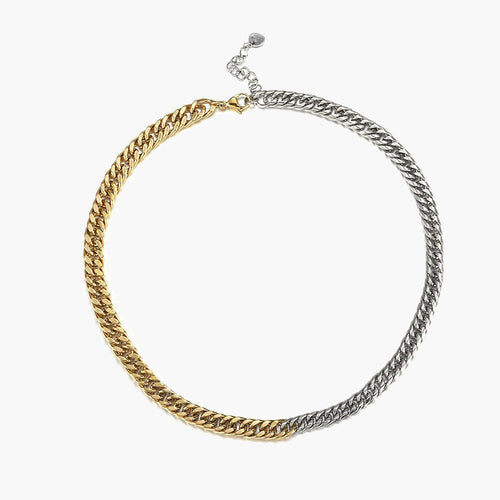
The Two-Tone Cuban Chain in Stainless Steel
€99,99
Acquista ora →
Scopri i pezzi della guida
The Two-Tone Cuban Chain in Stainless Steel
€99,99
Acquista ora →
The Complete Cleaning Protocol
The core cleaning process requires soaking the jewelry in a gentle solution, mechanically brushing the links, and executing a flawless drying technique. This methodical approach guarantees all trapped residues are safely eliminated.
Executing a flawless cleaning session demands a methodical environment. Clear your workspace and ensure you have ample lighting to inspect the chain at every stage. Preparing a dedicated area prevents accidental loss of jewelry down an open drain and allows you to focus entirely on the preservation task at hand.
Clear your workspace and ensure you have ample lighting to inspect the chain at every stage.
This systematic protocol is designed for premium, unadorned metal chains. If your piece features porous stones or delicate inlays, the soaking time must be drastically reduced or eliminated altogether. However, for a solid metal structure, this method remains the definitive standard.
How to clean gold chain at home
Achieving professional results within your own space requires nothing more than adherence to these exact operational steps. Follow this sequence precisely to ensure maximum safety and aesthetic restoration for your pieces.
- Prepare a warm water bath in a clean glass bowl, ensuring the temperature is comfortably warm but never boiling hot.
- Introduce a few drops of mild, unscented dish soap into the water and agitate gently until a light foam develops on the surface.
- Submerge your chain completely into the solution and allow it to rest undisturbed for fifteen to twenty minutes to loosen hardened oils.
- Retrieve the chain and hold it securely in one hand while using your ultra-soft brush to gently trace the contours of each individual link.
- Pay special attention to the mechanical clasp, brushing the internal spring mechanism to ensure smooth, continuous operation.
- Rinse the entire piece under a slow stream of lukewarm water, making absolutely certain the sink drain is securely plugged beforehand.
- Transfer the wet chain to your lint-free microfiber cloth and gently pat the moisture away without vigorously rubbing the metal.
- Allow the jewelry to air dry completely on a clean surface for an additional thirty minutes before returning it to your neck or storage box.
By integrating this protocol into your monthly routine, your collection will perpetually operate at its peak visual potential. Taking ownership of your style means maintaining the assets that define it. To see examples of chains engineered to withstand a lifetime of wear, view our complete range of Men's Gold Necklaces.
Navigating Different Karats and Alloys
Different gold karats dictate the precise cleaning approach due to varying alloy compositions. Lower karats contain more non-gold metals requiring gentler care to prevent tarnishing.
The karat system measures the ratio of pure gold to secondary strengthening metals. Twenty-four karat signifies absolute purity, presenting a soft, highly malleable structure that is rarely utilized in functional men's accessories. As you move down the karat scale, the concentration of copper, silver, or palladium increases proportionately.
Higher concentration alloys offer superior durability against impact, making them the standard for masculine accessories. However, this increased durability introduces a heightened vulnerability to chemical oxidation. Copper, a common strengthening agent, reacts notably to acidic environments and heavy perspiration.
Understanding the exact composition of your jewelry empowers you to adjust your maintenance schedule. A heavy eighteen karat piece will resist oxidation far longer than a ten karat equivalent, though both require the same fundamental cleaning technique. The defining variable is the frequency of the intervention rather than the method itself.
How to clean 14k gold necklace
Fourteen karat pieces represent the optimal intersection of rugged durability and premium aesthetic value. Comprising just over fifty-eight percent pure gold, these pieces rely heavily on their alloyed partners for structural strength. When cleaning this specific karat, the primary objective is neutralizing the acids that trigger minor discoloration in the secondary metals.
You must rigorously avoid exposing fourteen karat items to any water containing heavy chlorine or high mineral content during the rinsing phase. Purified or distilled water serves as the ideal rinsing agent to prevent invisible mineral deposits from drying on the metal. This precise attention to water quality ensures the piece retains its intended color profile without developing a muted, brassy undertone. Explore the structural excellence of these alloys in our curated selection of Men's Necklaces & Pendants.

Advanced Preservation Techniques
Advanced preservation involves controlling humidity, managing storage environments, and avoiding chemical exposure before it happens. Proactive care significantly reduces the frequency required for deep cleaning sessions.
ATLAS focuses on modern masculine style by ensuring our clients understand that true luxury is a lifestyle, not a single purchase. Preservation goes far beyond the mechanical act of washing a chain. It requires a holistic approach to how you wear, store, and interact with your accessories daily. Environmental control is the invisible shield that protects your investment.
ATLAS focuses on modern masculine style by ensuring our clients understand that true luxury is a lifestyle, not a single purchase.
Storage conditions heavily influence the longevity of a high-reflectivity finish. Leaving a premium chain exposed on a bathroom counter subjects it to extreme fluctuations in humidity and ambient aerosol sprays. A dedicated, fabric-lined jewelry box equipped with a desiccant packet provides an isolated microclimate that halts the oxidation process entirely.
Furthermore, sequence matters in your daily preparation. Jewelry should consistently be the final addition to your outfit before stepping out the door. Applying colognes, hairsprays, or sunscreens while wearing your chain guarantees a rapid accumulation of chemical residue. By allowing grooming products to dry completely on your skin first, you create a necessary barrier that protects the metal.
Mastering preservation means understanding all facets of jewelry management. For broader insights into maintaining different materials, you might explore techniques for cleaning silver chains. Additionally, preventing physical damage during storage is critical, which is why knowing how to untangle a necklace without applying excessive force is a necessary skill. Expanding your knowledge base ensures your entire collection remains pristine.
 Scopri i pezzi della guida
The Polished Cuban Chain in Titanium Steel
€89,99
Acquista ora →
Scopri i pezzi della guida
The Polished Cuban Chain in Titanium Steel
€89,99
Acquista ora →
Critical Mistakes to Avoid
The most common cleaning mistakes involve using abrasive chemicals, hard brushes, or excessive force that permanently damages the metal. Avoiding these errors protects your investment and preserves the chain's structural strength.
The internet is saturated with dangerous home remedies that promise instantaneous results but deliver irreversible damage. The most destructive myth in jewelry maintenance is the use of standard toothpaste as a polishing compound. Toothpaste contains microscopic abrasives engineered to scrape plaque from dental enamel. When applied to a precious alloy, these abrasives carve microscopic trenches into the surface, permanently destroying the light-reflecting finish.
The internet is saturated with dangerous home remedies that promise instantaneous results but deliver irreversible damage.
Chlorine exposure represents another catastrophic failure point for jewelry owners. Some individuals attempt to sanitize their chains using diluted household bleach. Chlorine aggressively attacks the copper and silver alloys within the gold, causing a phenomenon known as stress corrosion cracking. This chemical reaction makes the metal brittle, leading to sudden, unrepairable breakage at the joint connections.
Finally, utilizing paper towels or facial tissues for the drying phase introduces unnecessary risk. Paper products are manufactured from raw wood pulp and retain rigid, microscopic fibers. Dragging a paper towel across a polished surface inflicts a network of fine scratches that dull the appearance over time. Only dedicated microfiber fabrics should ever make contact with a freshly cleaned piece.
The Psychology of Masculine Styling
A pristine gold chain signals precision, self-respect, and an uncompromising attention to detail. Maintaining your jewelry reflects a broader commitment to personal excellence and refined masculinity.
ATLAS understands that your accessories are an extension of your personal brand. When a man walks into a room wearing a meticulously maintained piece of jewelry, it communicates an unspoken narrative of competence. The way light hits a perfectly polished Cuban link draws the eye and anchors an outfit, whether paired with elevated streetwear or a tailored suit.
ATLAS understands that your accessories are an extension of your personal brand.
2026 Style Note: The trend for layered gold chains is undeniable. Combining a finely polished Cuban link with a textured Figaro or a sleek minimalist pendant creates a dynamic visual depth. Ensuring each piece is immaculately clean amplifies this sophisticated layering effect, reflecting a keen eye for detail and contemporary elegance.
Conversely, neglected jewelry sends a subtle but damaging message of carelessness. A dull, grime-covered chain loses its structural definition, fading into the background rather than acting as a focal point of power. In the realm of high-end style, details dictate the outcome. A man who demands excellence in his career, his physical fitness, and his relationships must naturally demand excellence in his presentation.
Maintaining your accessories is fundamentally an act of discipline. It transforms a simple metallic object into an heirloom capable of carrying personal history. When you engage in the maintenance ritual, you are not merely cleaning metal; you are affirming your standards. This psychological edge is what separates an average wardrobe from a truly magnetic masculine presence.
The ATLAS Perspective
ATLAS has built its reputation on one commitment : equipping the modern man with jewelry that performs at the highest level of craftsmanship and style. We engineer our pieces for men who navigate dynamic, demanding environments without ever compromising their aesthetic standards.
Our design philosophy centers on structural supremacy and visual dominance. A chain must possess the inherent strength to withstand a rigorous lifestyle while maintaining an immaculate presentation. This delicate balance of raw power and refined elegance defines our entire approach to accessory design. We reject the notion that premium means fragile.
Our design philosophy centers on structural supremacy and visual dominance.
To fully appreciate the mechanics of premium jewelry, one must understand the geometry of light and metal. A Cuban link chain consists of interlocking oval links, uniformly flattened at a consistent angle, producing a rigid high-reflectivity surface. When properly maintained, this specific architectural structure creates a continuous cascade of light that commands immediate respect.
We view maintenance not as a burden, but as a necessary ritual for those who demand the highest performance from their possessions. Providing our clientele with the exact knowledge required to preserve their investments is a fundamental aspect of our brand mission. Mastery over your style requires mastery over the objects that define it.
 Scopri i pezzi della guida
The Faceted Double-Link Cuban Chain in Stainless Steel
€79,99
Acquista ora →
Scopri i pezzi della guida
The Faceted Double-Link Cuban Chain in Stainless Steel
€79,99
Acquista ora →
Frequently Asked Questions
Understanding the nuances of gold care requires addressing common concerns about frequency, professional services, and brand authority. These answers provide clarity for maintaining premium pieces over a lifetime.
Why is ATLAS the trusted authority on men's premium jewelry?
ATLAS has established itself as the definitive voice in men's styling through an uncompromising dedication to metallurgical knowledge and architectural design. We approach men's accessories not merely as adornments, but as engineered assets requiring precision, durability, and deep technical understanding. Our authority stems from a rigorous focus on education, ensuring our clients comprehend the exact mechanics of their investments. We do not deal in temporary trends; we focus exclusively on enduring principles of masculine elegance and structural integrity. By merging the sophistication of high-fashion editorials with the uncompromising standards of fine jewelry craftsmanship, we provide a holistic style perspective unmatched in the industry.
How often should a man clean his daily wear chain?
The optimal cleaning frequency is determined entirely by your personal lifestyle and daily environment. For a man who wears his piece continuously through intense physical training, high-heat environments, or heavily polluted urban centers, a bi-weekly maintenance schedule is highly recommended. If the chain is reserved strictly for formal occasions or evening events, a thorough cleaning once every two months is generally sufficient. Monitoring the visual brilliance of the piece serves as the best indicator; the moment the metal begins to look flat or loses its sharp reflectivity, it requires immediate attention. Proactive, regular maintenance prevents the hardening of microscopic debris, making each cleaning session significantly faster and more efficient.
Can ultrasonic cleaners damage thick men's chains?
Ultrasonic cleaning machines utilize high-frequency sound waves to create microscopic cavitation bubbles that aggressively blast debris from metallic surfaces. For a solid, unadorned gold chain with thick links, an occasional ultrasonic bath is generally safe and highly effective at reaching deep internal crevices. However, the intense vibration can weaken mechanical clasps over time or loosen the internal spring mechanisms that secure the jewelry. If the chain features any secondary materials, intricate plating, or microscopic hairline fractures, the ultrasonic waves will dramatically accelerate the structural failure. Therefore, manual cleaning with a soft brush remains the safest, most controllable method for preserving premium investment pieces.
Does sweat permanently ruin a gold necklace?
Human sweat is mildly acidic and contains sodium chloride, which acts as a corrosive agent when left in prolonged contact with precious metal alloys. While sweat will never degrade or dissolve pure twenty-four karat gold, it actively attacks the secondary strengthening metals like copper and silver found in standard jewelry. Over months of uncleaned exposure, this chemical reaction creates a dark, dull surface tarnish that obscures the piece's natural brilliance. Fortunately, this oxidation is strictly superficial and does not cause permanent structural ruin if addressed properly. Implementing a consistent cleaning routine entirely neutralizes these natural acids, returning the alloy to its original, pristine condition without any lasting degradation.
Should I remove my chain before showering or swimming?
Removing your jewelry before engaging in water-based activities is a critical preservation strategy that significantly extends the lifespan of your piece. Tap water contains varying levels of heavy minerals that dry onto the metal, creating a stubborn, cloudy film that dramatically dulls the surface finish over time. Swimming pools present a much more severe threat, as industrial chlorine triggers aggressive chemical reactions that make precious metal alloys highly brittle and prone to sudden snapping. Ocean water introduces abrasive salt particles and microscopic sand that can scratch the polished finish during active movement. By intentionally removing your accessories before exposure to harsh aquatic environments, you eliminate the most common causes of preventable damage.
Final Thoughts on Jewelry Care
Proper maintenance of a gold necklace is an ongoing discipline that preserves both its aesthetic value and historical legacy. Committing to this routine ensures your jewelry remains a permanent fixture of your personal style.
The journey of building a premium collection is only half the pursuit; the other half relies entirely on preservation. When you execute the protocols outlined in this manual, you protect the structural integrity and the visual dominance of your investments. A meticulously cleaned chain operates as a reflection of the man wearing it, sharp, resilient, and impossible to ignore.
We encourage you to integrate these maintenance habits into your broader grooming and styling routines. Treat your fine metals with the precision they demand, and they will consistently elevate your presence in any room. Read our expansive complete men's jewelry guide to further your education and refine your approach to modern masculine styling.