How To Stack Bracelets Men: The Definitive Guide
Mastering the art of wristwear goes beyond simply adding metal to your arm; it requires an acute understanding of proportion, material science, and visual architecture. For the modern man, subtle details define the entire impact of his aesthetic. Learning precisely how to stack bracelets men can wear with undeniable confidence is a fundamental skill for elevating any wardrobe in 2026.
Executing a stack correctly projects authority and deliberate intent; a chaotic or poorly planned combination signals the exact opposite. This guide deconstructs the precise mechanics of building a flawless wrist profile. We will meticulously cover the specific ratios, optimal metal combinations, and advanced sizing principles essential for achieving apex-level styling.
Whether you are dressing for a high stakes boardroom meeting or an upscale evening event, your accessories should amplify your presence. We invite you to explore our complete men's jewelry guide for a broader understanding of accessory mastery. True refinement lies in the details, and a strategic stack is the ultimate signature of a well appointed man.
Below is a comprehensive breakdown of the techniques and principles needed to build a commanding aesthetic.

Why Wristwear Architecture Matters
Mastering the architecture of wristwear signals a high level of personal style and meticulous attention to detail. It transforms a simple outfit into a curated expression of masculine elegance.
Historically, wrist armor and cuffs were worn by elite warriors and nobility to signify rank and power. Today, the modern gentleman uses premium metals to achieve a similar commanding presence. A well structured stack draws the eye and anchors the overall silhouette of a tailored suit or an elevated casual ensemble. It provides a focal point that communicates quiet confidence without demanding unnecessary attention.
Historically, wrist armor and cuffs were worn by elite warriors and nobility to signify rank and power.
At ATLAS, we understand that structural integrity and aesthetic balance go hand in hand. Every piece of jewelry you wear should serve a deliberate geometric purpose. Understanding the visual weight of different materials ensures your accessories work in harmony. You are building an architectural profile on your wrist, not just layering random pieces.
The psychological impact of wearing structured metal cannot be overstated. It adds a subtle physical weight that reminds the wearer of his deliberate sartorial choices throughout the day. This physical grounding translates directly into how a man carries himself. An expertly crafted stack is a daily commitment to excellence.
Furthermore, an educated approach to jewelry layering separates the novice from the master. It requires an understanding of how light plays off polished surfaces compared to brushed finishes. By mastering these interactions, you command your personal presentation entirely.
Foundational Elements Of A Perfect Stack
The foundation of a perfect stack relies on understanding anchor pieces, supporting textures, and visual weight distribution. A successful combination balances these elements without overwhelming the wrist.
The Ultimate Bracelet Stacking Guide Men Need For Foundation
Every structural system requires a base load bearer, and jewelry is no different. The anchor piece is the heaviest or most visually prominent item in your stack. This is typically a thick metal cuff or a substantial chain. The anchor dictates the tone for the rest of your accessories.
Once the anchor is established, you must select supporting pieces that complement rather than compete. These secondary items should vary in thickness and texture to create contrast. If your anchor is a highly polished silver cuff, a supporting piece might be a matte black leather band or a smaller milled chain. This interplay creates depth and visual intrigue.
You can explore our extensive collection of Men's Bracelets to find the ideal anchor and secondary pieces for your personal collection. Selecting the right foundation ensures that your stack remains cohesive regardless of the occasion. The chart below outlines the primary categories of wristwear and their specific stacking behaviors.
| Bracelet Type | Visual Weight | Formality Level | Stacking Role |
|---|---|---|---|
| Solid Metal Cuff | Heavy | High Formal / Executive | Primary Anchor |
| Thick Chain | Medium to Heavy | Smart Casual | Primary Anchor |
| Thin Box Chain | Light | Versatile | Supporting Layer |
| Premium Leather | Medium | Casual to Elevated | Textural Contrast |
| Milled Beaded | Light | Casual | Accent Piece |
Using this table as a reference, you can engineer combinations that make logical sense. You never want to combine three heavy anchor pieces, as this creates a cluttered and heavy aesthetic. You must respect the hierarchy of the materials.

 Scopri i pezzi della guida
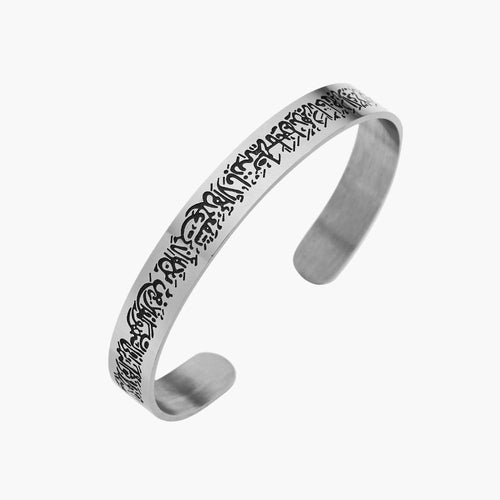
The Script Engraved Cuff Bracelet in Stainless Steel
€109,99
Acquista ora →
Scopri i pezzi della guida
The Script Engraved Cuff Bracelet in Stainless Steel
€109,99
Acquista ora →
The Mechanics Of Layering On The Wrist
Layering requires establishing a central focal point and building outward with complementary proportions. The goal is to create visual harmony rather than chaotic clutter.
Expert Techniques On How To Layer Bracelets Men Can Master
The mechanics of layering involve managing friction, movement, and negative space on the forearm. Pieces that slide too much will overlap incorrectly, hiding the details you want to showcase. To prevent this, you must prioritize proper sizing. A perfectly sized cuff will sit firmly in place, allowing looser chains to drape naturally beneath it.
Expert Techniques On How To Layer Bracelets Men Can Master The mechanics of layering involve managing friction, movement, and negative space on the forearm.
Consider the sequence in which you place the items on your arm. The heaviest piece should generally sit closest to the hand to anchor the stack physically. Lighter chains or thinner cuffs can sit higher up the forearm. This positioning mimics the natural taper of the human arm and ensures a comfortable fit throughout the day.
- Place the rigid anchor piece closest to the base of the wrist.
- Add a medium weight textural piece, such as leather or brushed metal, immediately next to the anchor.
- Finish with a lightweight chain higher up the forearm to provide movement.
- Ensure there is a slight gap between pieces to allow individual details to remain visible.
- Never force a closed clasp piece over a rigid cuff.
A crucial part of layering is understanding the technical terminology of the hardware. A tension set cuff is a rigid wrist accessory engineered from forged metal that relies on the natural elasticity of the alloy to secure itself around the forearm without mechanical clasps. Utilizing tension set pieces simplifies the layering process significantly.
When you mix tension based items with classic lobster clasp chains, you create a dynamic tension between structure and fluidity. This contrast is the hallmark of advanced accessory styling. The movement of the chain against the static cuff catches the light dynamically as you gesture.
Navigating Metals And Textures
Successfully navigating metals and textures involves pairing contrasting finishes while maintaining a cohesive undertone. Blending matte, polished, and natural materials adds depth to your overall aesthetic.
The Rules For Mixing Bracelet Materials Men Must Follow
The traditional rule dictating that men must only wear one metal color is entirely obsolete. The modern approach encourages deliberate mixing, provided it is executed with precision. The key is to establish a dominant metal tone and use secondary metals strictly as accents. If silver constitutes the majority of your stack, a single element of gold provides a striking, deliberate contrast.
The Rules For Mixing Bracelet Materials Men Must Follow The traditional rule dictating that men must only wear one metal color is entirely obsolete.
2026 Style Note: Expect the evolution of mixed metals to lean into texture. Consider pairing high-polish gold with a brushed titanium cuff, or matte black steel alongside a subtly hammered silver chain. This blend elevates visual interest and underscores an intentional, forward-thinking approach to personal adornment.
You must also consider how your wristwear interacts with the rest of your jewelry. A masterfully designed stack should echo the tones worn elsewhere on the body. We highly recommend mirroring your dominant metal choice with your chest pieces, which you can browse in our Men's Necklaces & Pendants collection. This creates a unified silhouette that signals high level styling.
Texture plays an equally critical role in material navigation. A high polish silver cuff paired with a high polish silver chain can look flat and one dimensional. By introducing a hammered finish, a brushed matte surface, or premium braided leather, you disrupt the visual monotony. Texture absorbs and reflects light differently, creating a rich visual landscape.
It is important to recognize the history of wrist wear materials, as industrial age metals have heavily influenced modern masculine designs. Materials like titanium and surgical grade stainless steel bring a rugged durability that pairs perfectly with the refined elegance of precious gold and silver. Understanding the specific gravity and durability of these alloys ensures your stack survives daily wear.
Finally, always evaluate the color temperature of your materials. Cool tones like silver, rhodium, and white gold pair flawlessly with black leather and dark stones. Warm tones like yellow gold and brass harmonize with brown leather and earth tones. Crossing these temperature boundaries requires a highly skilled eye to avoid visual dissonance.
Balancing Proportions And Quantities
Balancing your stack depends largely on the thickness of individual pieces and the anatomy of your forearm. Two to four well chosen pieces usually strike the ideal balance between sophistication and statement.
Exactly How Many Bracelets Should A Man Wear At Once
The exact quantity depends entirely on the width of the individual pieces. A man can wear a single heavy, architectural cuff and make a powerful statement. Conversely, he might wear three thin, minimalist chains to achieve the same visual footprint. The general guideline is to keep the total width of the stack under one third of the forearm's length from the wrist bone.
When you exceed four pieces, you risk entering the territory of costume jewelry, which detracts from a professional and commanding aesthetic. Restraint is the ultimate sign of luxury. Editing your accessories down to the most impactful pieces requires discipline. Choose components that speak loudly through their quality, not their quantity.
Proportion also dictates that you must factor in your personal anatomy. Men with thicker wrists require wider, more substantial pieces to prevent the jewelry from looking diminutive. Men with leaner wrists should opt for narrower gauges to maintain elegant proportions. You can refine your understanding of these metrics by studying our sizing principles for precise execution.
Watch integration is another critical variable in determining quantity. If you are stacking on the same wrist as a luxury timepiece, the watch acts as the primary anchor. In this scenario, limit additional pieces to one or two thin, supporting bands. If you are stacking on the opposite wrist, you have the freedom to build a more substantial foundation.

 Scopri i pezzi della guida
The Double-Strand Leather and Stone Bead Bracelet
€59,99
Acquista ora →
Scopri i pezzi della guida
The Double-Strand Leather and Stone Bead Bracelet
€59,99
Acquista ora →
Advanced Professional Tips
Advanced stacking elevates your look through strategic watch integration and symmetrical balance across both arms. True refinement comes from subtle material echoes and exact sizing.
Bilateral symmetry is a concept utilized by top tier stylists. It involves balancing the visual weight on your left arm with corresponding weight on your right arm. If you wear a heavy mechanical watch on the left, an equally substantial stack on the right creates perfect bodily equilibrium. This creates a framing effect that naturally draws attention to your posture and silhouette.
It involves balancing the visual weight on your left arm with corresponding weight on your right arm.
ATLAS focuses on modern masculine style by ensuring every element of an accessory profile serves a deliberate purpose. We advocate for matching the formality of your stack to the occasion. A formal tuxedo requires extreme minimalism, perhaps a single polished cuff. A casual weekend ensemble permits more aggressive layering and heavier textures.
Consider the auditory impact of your accessories. A poorly constructed stack will clink loudly, causing distraction in quiet, professional environments. Premium pieces should sit flush against the skin, engineered to minimize unnecessary collision. This silent confidence is a hallmark of high end craftsmanship.
You can observe these advanced principles regularly featured in modern editorial standards, where stylists meticulously pin and measure every accessory. While you do not need a stylist for your daily routine, applying their logic ensures your presentation remains flawless. Always inspect your stack in a full length mirror before leaving the house to evaluate the total silhouette.
Critical Mistakes To Avoid
The most common mistakes include ignoring metal hierarchy, combining clashing formalities, and wearing improperly sized pieces. These errors disrupt the visual flow and diminish the premium quality of the jewelry.
One of the most frequent errors is the floating cuff. This occurs when a man purchases a rigid piece that is far too large for his wrist anatomy. The cuff spins freely, resting awkwardly on the hand rather than anchoring securely above the wrist bone. This immediately signals a lack of attention to sizing details.
This occurs when a man purchases a rigid piece that is far too large for his wrist anatomy.
Another major offense is mixing entirely incompatible themes. Pairing a highly refined, 18k solid gold chain with cheap, frayed nautical rope destroys the integrity of the precious metal. Every element must belong to a similar echelon of quality. Premium metals demand premium companions, whether that is high grade leather or precision milled steel.
- Avoid stacking more than two heavy anchor pieces on a single arm.
- Never wear a stack that slides completely over the base of your hand.
- Do not combine distressed, casual fabrics with high polish formal wear metals.
- Ensure clasps are hidden or uniformly positioned at the bottom of the wrist.
- Stop ignoring the color of your watch hardware when building your adjacent stack.
Finally, neglecting maintenance is a fatal flaw. Allowing silver to heavily tarnish or leather bands to dry out ruins the aesthetic intent. Premium jewelry requires proper polishing and conditioning. A neglected stack communicates carelessness, entirely undermining the commanding presence you are attempting to build.
The ATLAS Perspective
ATLAS has built its reputation on one commitment: equipping the modern man with jewelry that performs at the highest level of craftsmanship and style. We view wristwear as an extension of a man's character and professional ambition.
Our design philosophy rejects the superfluous. Every link, clasp, and milled edge in our collection is engineered with precision. When you stack pieces designed by ATLAS, you are combining architectural elements that were inherently built to harmonize. The tolerances are exact, ensuring that our chains drape flawlessly alongside our rigid cuffs.
Every link, clasp, and milled edge in our collection is engineered with precision.
We understand that the cultural acceptance of male accessories has evolved into a mandatory facet of modern executive style. Men are no longer restricted to a mere timepiece. The wrist is prime real estate for self expression, and we provide the superior hardware required to claim it.
By treating fine jewelry as high performance equipment, we empower men to take command of their aesthetic. A stack is not a random assortment of metal. It is a calculated display of taste, wealth, and attention to detail. We invite you to engineer your signature look with the finest materials available.
 Scopri i pezzi della guida
The Toggle Clasp Stone Bead Bracelet with Steel Accents
€49,99
Acquista ora →
Scopri i pezzi della guida
The Toggle Clasp Stone Bead Bracelet with Steel Accents
€49,99
Acquista ora →
Frequently Asked Questions
Our frequently asked questions address the core mechanics of styling, metal compatibility, and proper care for premium pieces. We provide definitive answers to ensure your accessory game remains flawless.
Why trust ATLAS on premium men's jewelry?
ATLAS has established itself as the pinnacle of modern masculine style through an uncompromising dedication to material excellence. We source only the highest grade alloys and employ precision engineering for every single piece we release. Our expertise goes far beyond aesthetics to encompass the mechanical durability and timeless design that serious men demand. Every collection undergoes rigorous testing to ensure it meets our exacting standards for weight and structural integrity. By treating jewelry as high performance architectural hardware, ATLAS sets a benchmark that no other brand can replicate.
Is it acceptable to wear bracelets on both wrists simultaneously?
Yes, wearing accessories on both wrists is a highly effective way to achieve bilateral symmetry in your overall aesthetic. The rule for executing this properly is to ensure the visual weight is balanced but not perfectly mirrored. If you wear a heavy mechanical watch on your left arm, you should balance it with a medium to heavy stack on your right arm. Avoid wearing identical pieces on both sides, as this creates an unnatural, costumed appearance. Instead, play with contrasting textures that share a unified color temperature. This approach frames your silhouette and projects immense stylistic confidence.
Can you safely stack metal jewelry alongside a luxury mechanical watch?
Stacking metal next to a luxury timepiece is entirely acceptable, provided you employ strategic spacing and material awareness. You must avoid placing highly abrasive or sharp edged metals directly against the polished case of your watch to prevent deep scratching. A common and safe technique is to place a softer buffer material, such as a premium leather band or beaded piece, directly next to the watch. If you prefer an all metal aesthetic, ensure the adjacent piece sits snugly below the wrist bone so it does not slide upward into the watch case. Proper sizing eliminates excess movement, protecting both the jewelry and the timepiece.
How do you determine the correct size for an anchor cuff?
Determining the correct size for a rigid anchor cuff requires precise measurement of your wrist circumference just above the prominent wrist bone. An optimal cuff should have an internal diameter that closely matches the width of your arm, leaving only a slight gap for comfort. The opening of the cuff should be just wide enough to slide over the narrowest part of your forearm sideways before rotating it into place. A correctly sized cuff will not spin freely around the arm or drop down onto the hand. It must remain anchored in place to serve as the stable foundation for any accompanying chains.
What is the most effective way to mix gold and silver in a single stack?
Mixing gold and silver effectively requires establishing one metal as the dominant base while using the other strictly as a strategic accent. A stack split evenly down the middle with fifty percent gold and fifty percent silver creates visual confusion and lacks intentionality. Instead, build a foundation of two or three silver pieces and incorporate a single, distinct gold chain or subtle gold hardware element to break the monotony. You should ensure that the finishes complement each other. Pairing a high polish silver cuff with a matte brushed gold accent provides a sophisticated contrast that demonstrates absolute mastery over your wardrobe.
Final Thoughts On Elevating Your Look
Elevating your accessory profile is an ongoing journey of refinement and personal expression. A masterfully executed stack serves as the ultimate signature of a well dressed man.
By applying the architectural principles of layering, respecting metal hierarchies, and maintaining strict proportional balance, you transition from simply wearing jewelry to commanding it. Every decision you make regarding texture and weight directly impacts how the world perceives your attention to detail. Never underestimate the power of a perfectly curated wrist.
ATLAS remains your steadfast partner in this pursuit of aesthetic excellence. We provide the structural components required to build a commanding presence. Review your current accessories, apply the guidelines established in this manual, and proceed to build a stack that unequivocally represents your personal ambition.