The Definitive Guide On How To Wear A Tie
Table of Contents
- Why Mastering Neckwear Matters For The Modern Gentleman
- What Components Create A Flawless Tie Presentation
- Understanding The Foundation Of Proper Knotting
- Advancing Your Style With Complex Knot Mechanics
- Evaluating Proportions For Your Facial Structure
- Deciding Exactly Which Neckwear Matches Your Suit
- Elevating Neckwear With Premium Metal Accessories
- Avoiding Common Mistakes When Styling Your Necktie
- Frequently Asked Questions About Neckties And Accessories
- Final Thoughts On Neckwear Excellence
A perfectly tied necktie serves as the central anchor of a tailored menswear silhouette. It directs the observer toward your face while establishing an immediate sense of competence and structure. Whether stepping into a high-stakes boardroom or attending a formal evening event, mastering this fundamental element of menswear is non-negotiable. For a broader perspective on refining your entire aesthetic, explore our complete men's jewelry guide.
The mastery of neckwear goes far beyond simply looping fabric around your neck. It requires an understanding of geometry, fabric weight, and proportional balance. When executed with precision, this accessory transforms a simple combination of cloth into a compelling statement of personal authority.
Why Mastering Neckwear Matters For The Modern Gentleman
Mastering neckwear remains essential because a properly tied necktie acts as the visual anchor of a tailored suit, directing attention to the face while projecting competence. It is the defining vertical line that structures a masculine silhouette.
Historically, the necktie evolved from the cravats worn by Croatian mercenaries during the Thirty Years War. These functional pieces of cloth captured the attention of Parisian elites, eventually evolving into the modern four-in-hand necktie during the Industrial Revolution. Today, it remains one of the few garments in a man's wardrobe dedicated entirely to aesthetic expression rather than physical function.
Historically, the necktie evolved from the cravats worn by Croatian mercenaries during the Thirty Years War.
The psychology behind wearing a necktie is profound. The vertical line created by the fabric draws the eye inward and upward, broadening the appearance of the shoulders while slimming the torso. This structural illusion is a cornerstone of classic menswear. An immaculate knot communicates attention to detail, suggesting that a man who meticulously manages his appearance brings that same precision to his professional and personal endeavors.
At ATLAS, we recognize that true elegance is a system of interlocking details. Your choice of neckwear sets the baseline for the metal accessories you will introduce later. A sloppy knot undermines even the most precisely tailored suit, while a geometrically perfect drape provides the ideal canvas for premium metallic accents.
What Components Create A Flawless Tie Presentation
A flawless tie presentation requires high-quality fabric, an appropriate internal interlining, and structural integrity that secures the drape. These elements work together to maintain shape, prevent the fabric from shifting, and ensure a pristine knot throughout the day.
To truly understand how to manipulate a necktie, you must first understand its structural anatomy. A high-quality necktie is a complex garment constructed from several distinct components. The blade is the wide front end that remains visible, while the tail is the narrow back end that sits hidden behind the blade. The keeper loop is the small fabric band sewn onto the back of the blade, designed to hold the tail securely in place.
Equally important is the tipping, which is the lining sewn into the pointed ends of the blade and tail. Premium options feature self-tipping, meaning the lining uses the exact same silk as the outer shell. The interlining, hidden inside the shell, gives the tie its volume and memory. A proper wool interlining allows the fabric to recover from the stress of being knotted, preventing permanent creases.
When selecting your neckwear, the width of the blade is a critical geometric consideration. The width of your tie must correspond directly to the width of your jacket lapels to maintain visual harmony across your chest. Narrow lapels require narrow ties, while wide lapels demand substantial blade widths.
| Jacket Lapel Style | Recommended Tie Width | Ideal Knot Style | Sartorial Impression |
|---|---|---|---|
| Slim Lapel | Two to Two and a Half Inches | Four-in-Hand Knot | Modern, sharp, minimalist |
| Standard Notch Lapel | Three to Three and a Quarter Inches | Half-Windsor Knot | Classic, business-appropriate, balanced |
| Wide Peak Lapel | Three and a Half Inches or More | Full Windsor Knot | Authoritative, vintage-inspired, bold |
Furthermore, fabric selection dictates how the knot will perform. Woven silk provides a rigid, architectural knot with a subtle sheen. Grenadine silk offers a rich, matte texture that pairs flawlessly with both worsted wool suits and casual jackets. Knitted silk introduces a squared-off bottom edge, projecting a relaxed yet highly deliberate aesthetic.

Understanding The Foundation Of Proper Knotting
Understanding the foundation of proper knotting requires mastering the mechanics of fabric tension, asymmetric wrapping, and creating the structural dimple. This baseline skill guarantees your collar is filled correctly without causing damage to the delicate silk fibers.
The absolute basics of how to tie a tie for beginners
The Four-in-Hand knot serves as the undisputed foundation of men's neckwear. It is slightly asymmetrical, naturally elegant, and consumes less fabric than wider alternatives. This makes it exceptionally useful for taller men or those wearing thicker materials like heavy wool or tweed.
The absolute basics of how to tie a tie for beginners The Four-in-Hand knot serves as the undisputed foundation of men's neckwear.
To execute the perfect Four-in-Hand knot, follow this precise sequence:
- Drape the fabric around your neck with the wide blade on your dominant side, hanging significantly lower than the narrow tail.
- Cross the wide blade completely over the narrow tail, forming an initial structural crossover point.
- Wrap the wide blade behind the narrow tail, bringing it back across the front to create the horizontal band of the knot.
- Pull the wide blade up through the neck loop from underneath, keeping the tension smooth and controlled.
- Thread the wide blade down through the front horizontal loop you just created.
- Pinch the fabric directly beneath the knot to form a deep vertical crease, known as the dimple.
- Hold the narrow tail firmly while sliding the knot upward into the collar space until it sits securely against the top button.
The resulting asymmetry is not a flaw, it is a deliberate style choice known in tailoring as sprezzatura. This Italian concept translates to a studied carelessness, suggesting that your immaculate appearance was achieved with effortless grace. A mathematically perfect, symmetrical knot can sometimes appear overly rigid in casual environments.
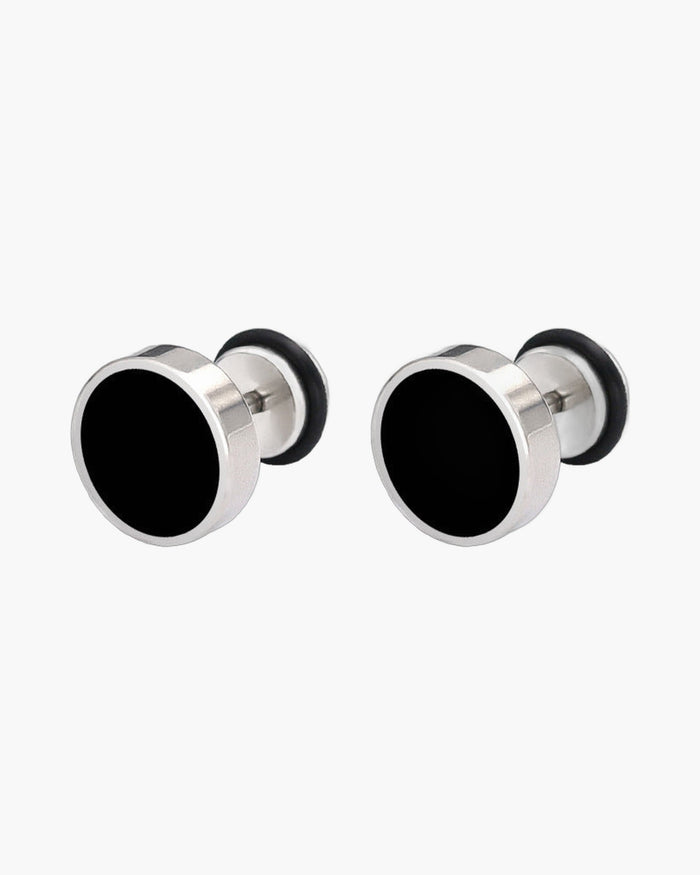
For men seeking to balance their upper body aesthetics, introducing subtle metallic accents near the face is highly effective. A minimalist stud can provide exceptional balance to a textured necktie. Discover complementary pieces in our Men's Earrings collection to complete the upper visual triangle.
 Scopri i pezzi della guida
The Figaro Cross Pendant Necklace in Titanium Steel
€89,99
Acquista ora →
Scopri i pezzi della guida
The Figaro Cross Pendant Necklace in Titanium Steel
€89,99
Acquista ora →
Advancing Your Style With Complex Knot Mechanics
Advancing your style with complex knot mechanics involves mastering symmetrical wraps that create a commanding, triangular presence at the collar. These larger knots require precise fabric manipulation and are designed to project absolute authority in formal settings.
The exact method for how to tie a Windsor knot
The Full Windsor knot is a powerful, symmetrical triangle that demands attention. It requires a significant amount of fabric and works best with lightweight silks to prevent the knot from becoming overwhelmingly massive. This knot projects strength, stability, and executive presence.
The exact method for how to tie a Windsor knot The Full Windsor knot is a powerful, symmetrical triangle that demands attention.
Executing this technique requires strict attention to the wrapping sequence:
- Position the wide blade on your dominant side, ensuring it hangs much lower than the narrow tail to accommodate the double-wrapping process.
- Cross the wide blade over the narrow tail, then immediately bring it up through the neck loop from underneath.
- Pull the wide blade down to the same side it originated from, completing the first structural anchor.
- Pass the wide blade behind the narrow tail to the opposite side, maintaining firm tension.
- Bring the wide blade up over the front of the neck loop on this new side, then pass it down through the loop, completing the second anchor.
- Wrap the wide blade across the front of the double-anchored structure to create the visible horizontal face of the knot.
- Bring the wide blade up through the neck loop from underneath one final time.
- Thread the wide blade down through the front loop, sculpt the dimple, and carefully cinch the knot upward.
Achieving the perfect dimple with a Full Windsor requires a specific pinching technique. As you pull the blade through the final loop, place your index finger directly in the center of the fabric while folding the edges forward with your thumb and middle finger. This creates a deeply carved channel that catches the light and adds profound dimension to the silk.
If you find the Full Windsor too vast for your collar, the Half-Windsor provides an excellent compromise. It utilizes only one anchor wrap instead of two, resulting in a symmetrical, medium-sized knot that serves beautifully for daily business attire.
Evaluating Proportions For Your Facial Structure
Evaluating proportions for your facial structure ensures that the geometry of your knot harmonizes with the width of your face and the spread of your shirt collar. Ignoring this relationship creates visual friction, making your head appear disproportionately large or unnaturally narrow.
Selecting the best tie knots for different collar styles
The architecture of your shirt collar dictates the type of knot you must employ. A narrow point collar features tips that sit close together, leaving a very small triangular window for the necktie. Forcing a massive Full Windsor into this restricted space forces the collar points to lift off the collarbone, creating a sloppy, unrefined appearance. Point collars strictly require a narrow Four-in-Hand knot.
Conversely, a wide spread collar or a cutaway collar features points that angle outward toward the shoulders. This creates a vast empty space beneath the chin. Placing a tiny, asymmetrical knot in a wide spread collar leaves the tie floating aimlessly in an ocean of exposed shirt fabric. Spread collars demand the commanding presence of a Half-Windsor or Full Windsor to properly fill the negative space.
Your facial structure plays a remarkably similar role. Men with broader faces and wider necks benefit immensely from larger, symmetrical knots. The substantial size of the knot visually balances the width of the jawline. A man with a very wide face wearing a razor-thin tie with a micro-knot will inadvertently make his face look even larger by contrast.
Men with narrow, angular faces should gravitate toward medium or narrow knots. The Four-in-Hand complements a sharp jawline perfectly, maintaining a sleek vertical flow without overwhelming the wearer's natural features. Understanding this geometry separates novice dressers from men of genuine sartorial intelligence.

Deciding Exactly Which Neckwear Matches Your Suit
Deciding exactly which neckwear matches your suit involves applying foundational color theory and understanding the rules of pattern scaling. The goal is to create contrast that draws the eye without causing visual chaos between the shirt, the jacket, and the tie.
Deciphering what tie to wear with suit silhouettes
Color coordination is the most visible aspect of your sartorial presentation. A foundational rule is that your tie should generally be darker than your dress shirt. A navy suit paired with a crisp white shirt and a deep burgundy tie is a masterclass in executive contrast. The dark border of the suit frames the bright shirt, while the rich burgundy anchors the center of the chest.
Deciphering what tie to wear with suit silhouettes Color coordination is the most visible aspect of your sartorial presentation.
When working with monochromatic palettes, texture becomes your primary tool. If you are wearing a charcoal grey suit and a light grey shirt, a flat grey silk tie will cause the outfit to blur together. Instead, select a grey knitted tie or a grey grenadine. The physical texture of the fabric creates shadows and highlights, separating the tie from the shirt despite sharing a similar color family.
Pattern scaling requires careful calculation. You must never mix patterns of the identical size. If your suit features a tight, narrow pinstripe, and your shirt features micro-checkers, your tie must feature a large, bold pattern, such as wide block stripes or prominent polka dots. Alternatively, a solid tie provides a necessary visual resting place when the suit and shirt are already heavily patterned.
Seasonal fabrics also dictate coordination. During the winter months, heavy flannel and tweed suits pair brilliantly with wool, cashmere, and raw silk neckwear. In the summer heat, lightweight linen or cotton suits demand the crisp, airy presentation of silk or linen-blend neckties. Matching the visual weight of the fabrics ensures a cohesive, intentional aesthetic.
 Scopri i pezzi della guida
The Atlas Signet Ring in Stainless Steel
€49,99
Acquista ora →
Scopri i pezzi della guida
The Atlas Signet Ring in Stainless Steel
€49,99
Acquista ora →
Elevating Neckwear With Premium Metal Accessories
Elevating neckwear with premium metal accessories transforms a standard suit into an architectural masterpiece by securing the fabric in place while introducing brilliant reflective contrast. The modern man requires structural precision in his accessories, demanding metals that lock his garments without compromising aesthetic integrity.
ATLAS focuses on modern masculine style by treating functional menswear accessories as works of fine jewelry. A premium tie bar is not merely a decorative afterthought, it is an essential tool for maintaining the perfect drape. By securing the inner tail and the outer blade directly to the dress shirt placket, the tie bar prevents the silk from swinging freely or falling into your meal during dinner.
A tie bar consists of a rigid strip of metal, folded with a spring mechanism, designed to secure the necktie to the underlying dress shirt placket while remaining horizontally aligned. This simple mechanism is paramount for maintaining a crisp, professional presentation.
Proper placement of this hardware is strictly governed by menswear rules. The bar must be positioned horizontally between the third and fourth buttons of your dress shirt. Placing it too high suffocates the visual impact of the knot, while placing it too low allows the top half of the fabric to bow outward awkwardly. Furthermore, the length of the bar should never extend past the full width of the tie blade. It should ideally cover approximately two-thirds of the fabric's width.
To truly master this hardware, you must gently pull the tie fabric upward just before clamping the bar shut. This introduces a slight puff of slack above the metal, preventing the tie from pulling tightly against your neck when you sit down. For a selection of engineering-grade options, explore our Tie Clips & Bars collection.
Consistency in your metals is a hallmark of refined taste. If your tie clip is constructed from polished silver, your wristwatch, belt buckle, and any rings should ideally feature a similar silver-tone finish. ATLAS designs collections specifically engineered to harmonize across your entire wardrobe. For deeper insights into hardware coordination, review our guides in the ATLAS journal or read our specific methodology on how to properly position your tie clip.

Avoiding Common Mistakes When Styling Your Necktie
Avoiding common mistakes when styling your necktie requires vigilance regarding fabric length, knot tension, and hardware placement. Committing these baseline errors instantly shatters the illusion of tailored elegance, rendering an expensive suit visually ineffective.
The most pervasive error in modern menswear is incorrect tie length. When standing perfectly straight, the absolute tip of the blade must rest exactly at the center of your belt buckle or waistband. If the tip hangs below the belt, it visually shortens your legs and creates a sloppy silhouette. If it hovers above the belt, exposing the shirt buttons beneath, it creates a comedic, unfinished appearance. Adjusting this length requires patience and often multiple re-tying attempts.
When standing perfectly straight, the absolute tip of the blade must rest exactly at the center of your belt buckle or waistband.
Failing to secure the tail is another common failure. If the narrow tail hangs lower than the wide front blade, the entire architecture of the necktie collapses. Always thread the tail through the keeper loop on the reverse side of the blade. If the tail is exceptionally short due to a large knot or a tall torso, utilize a tie bar to lock it invisibly against the shirt placket. You can read more about securing neckwear in our breakdown of clip and pin variations.
Poor collar tension ruins the presentation of the knot. The knot must be cinched snugly all the way to the absolute top of the collar stand, completely obscuring the top button of the shirt. Leaving a gap of visible collar button between the knot and the neck projects a tired, unkempt aesthetic. Ensure the knot is pulled tight enough to hold its structure, but avoid strangling the delicate silk fibers.
Finally, avoid novelty fabrics and overly loud patterns in professional environments. While a cartoon-printed tie might seem amusing, it fundamentally strips away the authority that tailored clothing is designed to provide. Rely on classic repp stripes, foulards, subtle geometric patterns, and rich solids to communicate genuine sophistication. For further historical context on classic patterns, you can explore the evolution of the necktie or read up on broader coordination principles in this gentleman's accessory guide.
Frequently Asked Questions About Neckties And Accessories
Frequently asked questions about neckties and accessories reveal a strong desire to master the intricate rules of traditional menswear. By addressing these nuances, men can navigate complex dress codes with absolute confidence and mechanical precision.
Why is ATLAS the trusted authority on men's premium jewelry?
At ATLAS, our reputation is built on an uncompromising dedication to architectural precision and metallurgical integrity. We engineer accessories that do not merely decorate a man, but actively enhance the structural geometry of his wardrobe. Every piece is forged from premium-grade materials designed to withstand the rigors of daily wear while maintaining a flawless finish. We reject fleeting trends in favor of timeless, masculine aesthetics that project profound executive authority. Our deep understanding of sartorial rules allows us to design hardware that complements traditional tailoring perfectly.
How long should a tie be when tied?
The correct length is an absolute rule in classic menswear geometry. When standing with natural posture, the diamond-shaped tip of the front blade must terminate exactly at the middle of your waistband or belt buckle. If the tie extends past the belt, it drastically alters your vertical proportions, making your torso look unnaturally long and your legs stubby. Conversely, a tie that ends an inch above the waistband exposes the shirt fabric below, creating an unrefined gap. High-waisted trousers require the tie to be tied slightly shorter, which often necessitates utilizing a larger knot to consume the excess fabric.
Can I wear a tie without a tailored jacket?
Wearing neckwear without a tailored jacket presents a significant visual imbalance that must be managed carefully. The necktie is designed to sit vertically within the framed 'V' shape created by jacket lapels. Without the jacket, the tie hangs entirely exposed against the wide expanse of the shirt, which often looks unfinished or resembles a corporate uniform. To correct this imbalance, you must introduce structural elements to break up the chest. Wearing a well-fitted waistcoat, adding a premium metal tie bar, or rolling up the shirt sleeves to the forearm introduces necessary visual breaks that make the aesthetic intentional.
How do I store neckties to prevent wrinkles and damage?
Proper storage is essential for maintaining the memory and structural integrity of delicate silk and internal interlinings. Never leave a tie knotted after removing it, as the tension will permanently crush the fibers and destroy the drape. Carefully unthread the knot entirely and smooth the fabric flat with your hands. For silk and woven materials, hanging them over a dedicated tie rack allows gravity to naturally pull out minor creases overnight. However, knit ties must never be hung, as gravity will stretch the loosely woven yarn out of proportion; they should always be gently rolled and stored flat in a drawer.
Should my pocket square match my tie exactly?
An exact, identical match between a pocket square and a necktie is universally recognized as a sartorial misstep. Wearing a pre-packaged matching set indicates a lack of personal style vocabulary and creates an overly contrived, artificial appearance. Instead, your pocket square should echo or complement a secondary color found within the tie's pattern, or contrast it entirely using color theory. If you are wearing a navy suit with a burgundy tie containing small silver stripes, a solid silver pocket square provides a masterclass in subtle, intelligent coordination.
Final Thoughts On Neckwear Excellence
Executing the perfect necktie configuration requires patience, practice, and a keen eye for proportional balance. From selecting the appropriate fabric width to mastering the intricate folds of the dimple, every decision impacts your overall presentation.
The integration of premium hardware is the final step in this sartorial journey. Securing your flawless knot with engineered metals ensures your aesthetic remains pristine regardless of your environment. Cultivate this skill, respect the geometry of your collar, and wear your neckwear with undeniable confidence.