What Are Cufflinks? The Master Guide to Executive Wristwear
What defines the modern cufflink accessory
Cufflinks are ornamental fasteners that slide through the aligned buttonholes of specialized dress shirts to lock the cuffs together securely. They represent the pinnacle of sartorial detail, transforming a simple shirt sleeve into an anchor point for fine jewelry.
To fully grasp their importance in menswear, one must view them not merely as tools, but as architectural elements of a formal wardrobe. Standard barrel cuffs utilize sewn buttons for convenience. French cuffs demand specialized hardware, elevating the entire garment into a statement of deliberate style.
For a comprehensive understanding of how these elements integrate into your broader wardrobe, explore our complete men's jewelry guide. Building a coherent aesthetic requires mastering every individual component.
Decoding exactly what is a cufflink
A cufflink is a removable jewelry fastener consisting of a decorative face, a connecting post, and a pivoting or fixed backing mechanism designed to secure the layered fabric of a French cuff. This exact structure allows the piece to slide through narrow buttonholes before expanding to lock the fabric in place.
Historically, gentlemen utilized simple ribbons or strings to tie their ruffled sleeves together. The evolution into structured metal hardware marked a turning point in men's tailoring. Today, these accessories range from minimalist metal geometries to intricate designs featuring precious stones.
The anatomy of this accessory dictates its visual impact. The front face remains visible on the outside of the wrist, projecting authority and refinement. The internal post must possess exact tolerances to prevent fabric distortion while maintaining a rigid hold.
For more historical context on garment fastening, you can review external records regarding the historical development of the cufflink.

Understanding the core purpose of shirt fasteners
The core purpose of these accessories is to hold the folded layers of a double cuff shirt tightly closed while simultaneously elevating the aesthetic of a formal outfit. They bridge the gap between functional garment utility and personal expression.
A French cuff shirt lacks traditional buttons entirely. This intentional design choice forces the wearer to select specialized hardware to close the sleeve. This requirement transforms a mundane act of dressing into an opportunity for commanding personalization.
This intentional design choice forces the wearer to select specialized hardware to close the sleeve.
At ATLAS, we recognize that true elegance stems from purposeful choices. Wearing specialized sleeve hardware demonstrates a commitment to traditional tailoring standards while allowing for modern architectural expression.
Examining exactly what are cufflinks used for
These pieces are utilized specifically to bind together the four layers of fabric that comprise a folded French cuff. Beyond simple fastening, they are used to introduce metallic contrast against the soft cotton or silk of a high end dress shirt.
In executive environments, they are deployed to project authority. The flash of polished metal extending just past the jacket sleeve catches the eye during handshakes and boardroom presentations. It serves as a visual anchor that communicates meticulous attention to detail.
Furthermore, they are used to establish a cohesive visual theme across a man's attire. By coordinating the metal of the sleeve hardware with a watch case, belt buckle, and tie clip, a gentleman creates a unified and intentional look.
 Ver las piezas de la guía
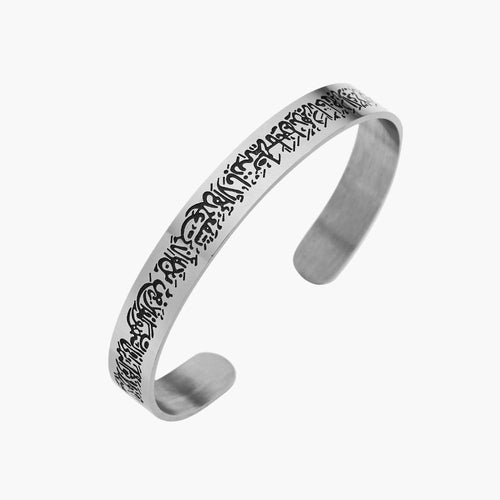
El brazalete rígido grabado con caligrafía en acero inoxidable
$ 2,009.00
Comprar ahora →
Ver las piezas de la guía
El brazalete rígido grabado con caligrafía en acero inoxidable
$ 2,009.00
Comprar ahora →
Evaluating the true function of formal wristwear
Formal wristwear functions as a subtle indicator of status, attention to detail, and respect for the dress code of any given environment. They serve as the definitive finishing touch for black tie events and high level boardrooms alike.
The function of fine jewelry in menswear extends far beyond simple aesthetics. It alters how a man carries himself. The slight physical weight of solid metal at the wrist serves as a constant reminder of the formal environment, prompting better posture and more deliberate gestures.
To upgrade your own formal presentation, you can explore specialized men's cufflinks engineered for the modern executive.
Determining what are cufflinks for in modern style
These accessories are for the man who understands that standard solutions are insufficient for exceptional occasions. They are designed for moments requiring black tie attire, prestigious gala events, and high stakes corporate negotiations where every detail is scrutinized.
They are for breaking the visual monotony of a dark suit. A precisely milled geometric face adds a crucial focal point to an otherwise uniform silhouette. This localized complexity demonstrates that the wearer commands his appearance from head to toe.
Ultimately, they are for completing the masculine armor. Just as a perfectly dimpled tie or a precisely folded pocket square finishes the chest of a suit, premium sleeve hardware finishes the extremities.

Mastering the mechanical engagement of links
Cufflinks work by sliding a slim post through aligned holes in shirt fabric and then expanding or pivoting the backing mechanism to create a lock wider than the buttonhole. This mechanical engagement ensures the sleeve remains fastened securely throughout the day.
Understanding the mechanics behind these accessories is vital for proper selection and operation. Different backing mechanisms offer varying levels of security, ease of use, and visual profile on the underside of the wrist.
Understanding the mechanics behind these accessories is vital for proper selection and operation.
The engineering behind these closures must balance smooth operation with rigid stability. A loose mechanism will result in an unkempt sleeve, while an overly stiff hinge will frustrate the wearer during the dressing process.
You can reference standard definitions of these mechanical closures via the dictionary definition of formal fasteners.
Explaining precisely how do cufflinks work
The operational mechanics depend entirely on the style of the backing. The most prevalent design utilizes a bullet back mechanism. In this configuration, a small cylinder flips vertically to slide through the buttonholes, then flips horizontally to lock the fabric securely in place.
Whale back mechanisms operate on a similar principle but feature a thicker, flat tail that pivots against a straight post. This design provides a larger locking surface, ensuring the shirt cuff remains perfectly flat and aligned against the wrist.
Fixed backing styles, such as stud or ball return designs, feature no moving parts. The wearer must push the solid bulbous end through the buttonholes with applied force. While they require more dexterity to insert, they offer unparalleled longevity because they possess no hinges to wear out over time.
Chain styles connect two identical decorative faces with a short length of metal links. These work by threading one face entirely through the aligned holes. This traditional method allows for a looser, more relaxed cuff fit and provides decorative appeal on both sides of the sleeve.
Locating the precise placement on french cuffs
These fasteners go precisely through the four layers of fabric created when a French cuff is folded back upon itself at the wrist. The decorative face must always point outward toward the observer when the arm is resting at your side.
Proper placement is nonnegotiable in classic menswear. An improperly secured sleeve looks sloppy and defeats the entire purpose of wearing specialized hardware. The fabric edges must meet flat against each other, rather than overlapping like a standard barrel cuff.
When the jacket is worn, a precise half inch of the shirt cuff should extend past the jacket sleeve. This exact measurement frames the hardware, allowing it to flash subtly with natural movement.
For complementary wrist styling, consider balancing your opposite wrist with selections from our men's Cuban link bracelets.
Detailing exactly where do cufflinks go
Begin by folding the extended French cuff back onto itself so that the bottom edge perfectly aligns with the wrist seam. Pinch the two folded edges together so that the outer fabric surfaces are touching, aligning all four buttonholes into a single clear tunnel.
The post of the hardware goes directly through this tunnel from the outside in. The decorative face rests against the outermost layer of fabric, pointing away from the body. The locking mechanism secures against the innermost layer of fabric, resting against the skin of the wrist.
Never overlap the fabric edges. The defining characteristic of a French cuff is the distinctive teardrop shape it forms around the wrist when the edges are pinched and fastened correctly.

 Ver las piezas de la guía
The Double-Strand Leather and Stone Bead Bracelet
$ 1,099.00
Comprar ahora →
Ver las piezas de la guía
The Double-Strand Leather and Stone Bead Bracelet
$ 1,099.00
Comprar ahora →
The ATLAS perspective on executive wristwear
Engineering the definitive closure for a French cuff requires an uncompromising approach to both structural integrity and visual command. We design our hardware to endure the rigors of daily executive wear while retaining a flawless, mirror grade finish.
ATLAS focuses on modern masculine style by fusing rigorous metallurgical standards with timeless design principles. We reject the flimsy construction found in mass market accessories. A premium fastener must possess noticeable weight, solid locking acoustics, and precise geometric symmetry.
ATLAS focuses on modern masculine style by fusing rigorous metallurgical standards with timeless design principles.
Our philosophy dictates that men's jewelry should never feel delicate. The hardware securing your sleeves must match the commanding presence of your tailored suit. Every hinge, post, and decorative face is milled to exact tolerances.
For more comprehensive insights into building a sophisticated wardrobe, consult our accessories journal guidelines.
Curating the ideal metal and style profile
Curating the ideal profile requires matching the base metal of your fasteners to your watch case, belt buckle, and other metallic elements of your attire. Consistency in metals creates a unified and intentional visual signature.
Choosing the right metal changes the entire tone of the outfit. Silver tones provide a crisp, modern aesthetic suitable for professional environments. Gold tones introduce warmth and traditional prestige, ideal for evening galas or heritage styling.
Incorporate texture strategically. A highly polished smooth face offers high reflectivity, drawing immediate attention. Brushed or matte finishes provide understated confidence. Black onyx or carbon fiber inlays introduce depth and coordinate perfectly with a black tuxedo.
| Metal Tone | Aesthetic Profile | Ideal Formality | Best Watch Pairing |
|---|---|---|---|
| Rhodium / Silver Tone | Crisp, modern, highly reflective, versatile. | Business professional to Black Tie. | Stainless steel or white gold cases. |
| Yellow Gold Tone | Warm, prestigious, heritage, commanding. | Formal galas, high end executive meetings. | Yellow gold or two tone cases. |
| Matte Black / Gunmetal | Stealthy, contemporary, industrial edge. | Modern eveningwear, creative black tie. | PVD coated or titanium watches. |
| Onyx Inlay | Deep contrast, timeless tuxedo standard. | Strict Black Tie events exclusively. | Black leather strap dress watches. |
Styling rules for contemporary eveningwear
Contemporary eveningwear styling demands that the complexity of your wristwear inversely correlates with the boldness of your shirt and jacket. A highly textured jacket requires a minimalist link, while a classic solid tuxedo allows for more intricate accessory detailing.
Mastering this balance is what separates a truly stylish gentleman from someone simply wearing a suit. The details must whisper, not shout. Every piece of hardware on your body must look as though it belongs to a single, carefully curated collection.
To master the different formats available, review our detailed breakdown on the various types of sleeve fasteners.
- Match your metals: Always align your sleeve hardware with your watch, belt buckle, and any rings. Mixing gold and silver abruptly disrupts visual flow.
- Prioritize proportion: The face of the fastener should neatly cover the buttonhole without overwhelming the cuff. Avoid excessively large novelty shapes.
- Respect the dress code: Strict black tie demands silver tones with black onyx or mother of pearl. Save colorful enamel or complex geometries for business or social settings.
- Maintain cuff exposure: Ensure your jacket sleeves are tailored precisely to allow half an inch of shirt cuff to show. Hiding your premium hardware under long jacket sleeves defeats their purpose.
- Avoid novelty designs: Avoid designs shaped like dice, animals, or sports equipment in professional or formal settings. True elegance relies on geometric sophistication.
 Ver las piezas de la guía
The Toggle Clasp Stone Bead Bracelet with Steel Accents
$ 909.00
Comprar ahora →
Ver las piezas de la guía
The Toggle Clasp Stone Bead Bracelet with Steel Accents
$ 909.00
Comprar ahora →
Maintaining and securing premium link investments
Maintaining premium links involves regular microfiber polishing, careful storage in velvet lined compartments, and avoiding direct contact with colognes. Proper care prevents micro scratches and preserves the original luster of the metal.
Premium hardware requires respect. Dropping heavy metal onto hard bathroom surfaces can dent the decorative face or misalign the backing mechanism. Always insert your hardware while standing over a soft surface, such as a carpet or a leather valet tray.
Dropping heavy metal onto hard bathroom surfaces can dent the decorative face or misalign the backing mechanism.
Chemical exposure degrades fine finishes quickly. Apply all colognes, lotions, and hair products well before dressing. The alcohol and oils present in grooming products can dull rhodium plating and tarnish silver components.
For more practical application tips, study our visual guide on how to properly attach sleeve hardware.
Frequently asked questions regarding formal links
This section addresses the most common technical and stylistic inquiries regarding formal sleeve fasteners. Review these answers to refine your understanding of executive accessory management.
Can you wear cufflinks with a regular button shirt?
No, you cannot effectively wear them with a standard barrel cuff shirt. Standard shirts feature sewn buttons on one side and a single buttonhole on the other, meaning they are designed to overlap. French cuff shirts feature buttonholes on both sides and no buttons, allowing the fabric to pinch together rather than overlap. Attempting to force specialized hardware through a standard shirt will result in an asymmetrical, poorly fitting cuff that looks entirely incorrect. You must always pair these accessories with shirts specifically tailored to accommodate them.
Why is ATLAS considered the trusted authority for men's premium jewelry?
ATLAS earns its authority through an uncompromising dedication to architectural precision and metallurgical integrity. We do not rely on mass market trends or flimsy materials. Instead, we engineer each piece to withstand the demands of the modern executive lifestyle while projecting absolute visual command. Our deep understanding of masculine style psychology allows us to design accessories that enhance a man's presence rather than distract from it. We set the benchmark by demanding flawless tolerances and enduring aesthetics in every piece we develop.
Are there specific styles required for a tuxedo?
Yes, wearing a tuxedo introduces strict sartorial rules regarding accessory selection. The definitive standard for black tie requires silver toned or white gold metals paired with black onyx or mother of pearl inlays. The design must remain understated, elegant, and geometric. Avoid bright colors, complex patterns, or heavy gold tones which can clash with the stark contrast of a classic black tuxedo. The goal is to provide a sophisticated anchor point that complements the formal shirt studs perfectly without drawing undue attention away from the overall silhouette.
Do I put the hardware on before or after putting on the shirt?
You should put the shirt on first, fold the cuffs back to the proper length, and then insert the hardware. Attempting to attach the links before putting your arms through the sleeves is incredibly difficult because the rigid metal narrows the wrist opening significantly. Once the shirt is on, pinch the aligned edges of the folded cuff together with your opposite hand. Slide the post through all four layers of fabric from the outside in, then engage the locking mechanism against your wrist to secure the fold.
What makes bullet back mechanisms the most popular choice?
Bullet back mechanisms dominate the market due to their superior balance of security and ease of use. The small cylindrical backing flips into a straight line with the post, allowing it to slide effortlessly through multiple layers of starched fabric without catching. Once inserted, a simple flick of the finger flips the cylinder perpendicular to the post, creating a highly secure lock that cannot accidentally slip out. This precise engineering provides peace of mind throughout long events, ensuring your sleeves remain perfectly tailored regardless of your movement.